Child Custody Journal Log Book: A Practical Tool for Custody Preparation
Evaluating the Purpose of a Structured Custody Log
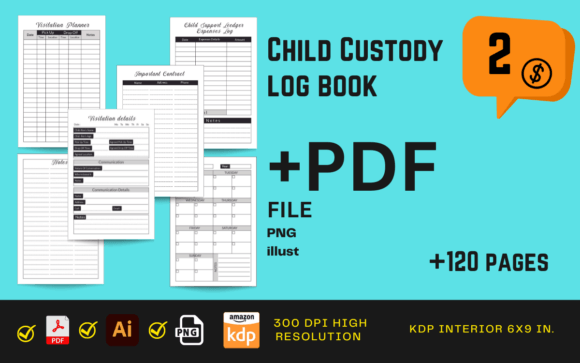
The Child Custody Journal Log Book serves as a centralized paper-based system for parents navigating custody arrangements. Its primary function is to transform scattered notes, memories, and text messages into a single, chronological reference. Inside, dedicated sections guide users to record visitation details, communication patterns, child-related expenses, court dates, and important contacts. The book is designed with a straightforward layout, typically offering 130 pages of prompted entries within a portable 6-inch by 9-inch format. Rather than a blank notebook, it provides intentional structure—spaces to note date, time, location, attendees, and key observations for each parenting exchange.
For someone researching tools to manage a custody case, this journal represents a non-digital method of evidence gathering. It functions as a private log that can later inform legal strategy or be referenced in mediation. The physical nature of a bound book offers a sense of permanence and intentionality. Each entry becomes a deliberate act of record-keeping, free from the distractions of smartphones or cloud storage concerns. This approach appeals to individuals who prefer handwriting as a cognitive process for retaining details or who may be less comfortable navigating complex apps during stressful life transitions.
Why Someone Might Seek Out a Custody Logging System
Parents often find themselves in need of a reliable logging system when verbal agreements break down or when high-conflict dynamics introduce uncertainty. Memories shift, and without documentation, critical details can become disputed. A custody journal directly addresses this concern by creating a sequential account of parenting time. It is not just about negative events; it can also track positive interactions, developmental milestones noticed during visits, or successful co-parenting moments that demonstrate a child’s well-being.
Reason for interest typically falls into three broad categories. First, a parent may perceive a growing need to protect their parental rights by documenting cancellations, late arrivals, or denied access. Second, they might be preparing for an upcoming court hearing or custody evaluation and require organized, factual summaries. Third, some people simply find personal peace of mind in visually seeing that communication and visits are being logged, reducing the anxiety of forgetting important facts. The act of logging can restore a small sense of control in an often chaotic legal process. It transfers the burden of proof from memory to paper, grounding claims in a recorded timeline.
Recognizing the Practical Benefits of a Dedicated Logbook
Using a dedicated tool like the Child Custody Journal Log Book offers several concrete benefits. The consistent format reduces the mental load of deciding what to write each time. Prompts serve as a checklist, reminding users to capture details that may later be legally significant, such as the child’s emotional state upon pickup or drop-off, any verbal exchanges with the other parent, and adherence to scheduled times. Over weeks and months, these entries can reveal patterns of behavior that isolated incidents cannot show—for example, a recurring pattern of missed calls during designated evening check-ins or consistent tension during exchanges in public places.
- Centralized Evidence: All information—from expense receipts to text message summaries—lives in one physical volume, simplifying preparation for meetings with attorneys.
- Expense Tracking: A built-in way to log child-related expenses helps maintain clarity on medical bills, school supplies, or extracurricular costs, which may factor into financial arrangements.
- Communication Log: Documenting the tone, content, and frequency of co-parenting communication provides valuable context beyond the raw words in a message.
- Court Readiness: A filled journal can support petitions for modification by demonstrating a factual history rather than relying on emotional testimony.
Beyond legal utility, the journal holds psychological value. Parents can offload stressful memories into a closed, secure space. This process helps separate daily emotional reactions from factual events. When preparing for a custody conference, the ability to review and summarize calmly logged entries can improve self-presentation and reduce the chance of being caught off guard by a disputed timeline. For self-represented litigants especially, this organizational backbone can be a crucial equalizer in a complex legal environment.
Important Tradeoffs and Considerations to Keep in Mind
While a paper custody journal provides clear benefits, it is not without practical considerations. The most significant requirement is personal consistency. A tool like this only holds value if entries are made promptly and regularly. Delaying documentation increases the risk of inaccuracy or forgetting crucial nuances. Creating a routine—perhaps spending ten minutes after each exchange to write notes—is essential but can feel burdensome during already stressful periods. Users must honestly assess their capacity to maintain such a routine before relying on the system.
Another consideration involves the nature of the evidence itself. A personal logbook is a self-reported document. In some legal contexts, it may be viewed as a contemporaneous record that carries weight, while in others, it might serve primarily as a memory aid for testimony rather than standalone proof. It does not replace formal court filings, certified communication records, or professional evaluations. Parents should understand that the journal is a supplement to, not a substitute for, legal advice and formal evidence gathering.
The physical format also brings specific tradeoffs. A book cannot be searched by keyword, cannot easily generate summary charts, and does not offer cloud backup. If lost or damaged, the information is often irreplaceable. For some, the privacy of a physical book feels safer than digital data stored on a server; for others, the lack of an automatic backup is a serious vulnerability. Additionally, the act of visibly taking notes during a tense exchange could escalate conflict with a co-parent who may misunderstand or react negatively to being logged.
Scenarios Where This Journal Shines as a Strong Fit
The Child Custody Journal Log Book tends to be most effective in specific, recognizable situations. Parents dealing with a high-conflict co-parent where allegations are common often find a paper trail indispensable. When every interaction feels scrutinized, a neutral, factual log can counter false narratives. Similarly, when a parent suspects that agreed-upon schedules are being systematically ignored, written records of each violation become powerful evidence to demonstrate a pattern of non-compliance. In these contexts, the journal functions as a protective mechanism, capturing objective data without emotional escalation.
It is also a strong fit for individuals who are not technologically proficient or who want to minimize screen time during sensitive family moments. The deliberate, quiet act of writing by hand resonates with people who process information better away from digital interfaces. For those representing themselves in court, a well-maintained journal can offer a structured way to present their side of events, giving them a concrete reference during hearings or mediation sessions. The book becomes a visible token of their effort to document honestly and methodically, which can positively influence how a judge or mediator perceives their credibility.
Beyond conflict, the book supports families who want to keep a private, detailed chronicle of a child’s growth across two households. Tracking school events, medical appointments, and behavioral changes in one unified space can benefit co-parent communication when used constructively. The journal’s expense section also helps immediately clarify financial disputes, providing a direct log of who covered which costs and when.
Situations Where Alternatives May Be Worth Exploring
There are circumstances where a paper-based custody journal might not be the optimal solution, and exploring alternatives could better align with a parent’s goals. If a case demands frequent submission of digital exhibits, a digital tracking system or co-parenting software that timestamps entries, organizes exported reports, and integrates communication screenshots may be more efficient. Legal professionals sometimes prefer digitally generated logs that can be easily shared, printed in standardized formats, and linked to calendar data.
Parents in amicable co-parenting relationships, where trust is high and conflict is low, might find a structured journal to be unnecessarily formal. Simple shared online calendars or respectful text message confirmations can often handle scheduling without the need for extensive logging. Introducing a detailed book into a cooperative dynamic could inadvertently create tension or be misinterpreted as a lack of trust. In these situations, lighter tools focused purely on scheduling and expense tracking may maintain the collaborative spirit more effectively.
Additionally, if a parent is already experiencing extreme emotional exhaustion, adding a daily archival task might contribute to burnout. In such cases, seeking support from a therapist, family mediator, or legal professional to streamline documentation requirements might be a healthier first step. The journal works best as a sustainable habit, not a source of additional stress. Alternatives like voice memo journals, dictation apps, or simply retaining a lawyer to handle evidence compilation could provide relief while still preserving important information.
Making a Sound Decision for Your Custody Journey
Choosing whether to incorporate the Child Custody Journal Log Book into your custody preparation requires honest self-assessment and a clear evaluation of your case’s unique landscape. Start by examining the current state of conflict and communication frequency. If you frequently find yourself trying to remember the precise wording of a conversation or the exact time of a missed visit, a structured logging system addresses a genuine pain point. If disputes are rare and schedules are generally followed, a simpler approach may suffice.
Consider your documentation style. Do you find comfort in handwriting, or does digital input feel more natural and time-efficient? A 130-page journal is a commitment to a process; its value compounds with consistent use but diminishes if left on a shelf. Look at the layout samples if available. Ensure the prompts cover the specific details you need to track—some individuals require extensive room for communication logs, while others prioritize financial breakdowns.
Finally, align the tool with your legal reality. Speak with an attorney if possible about what form of documentation is most impactful in your jurisdiction. A dated, pen-and-ink journal can be seen as a credible contemporaneous record, but understanding local norms helps set realistic expectations. The journal is not a magical solution for winning a custody battle; it is an instrument for gathering and organizing facts so you can show up prepared, calm, and clear. When used thoughtfully, it converts reactive worry into proactive documentation, shifting the focus from anxiety about what might be lost to quiet confidence in what has been accurately recorded.