Evaluating the Game Book Tool Interior for KDP Vol-17 as a Ready-Made Puzzle Book Solution
When you browse the low-content publishing space on Amazon, you quickly notice that puzzle and game books remain a consistently popular niche. For creators who want to enter this market without designing every page from scratch, templates and pre-made interiors offer a practical shortcut. One such option is the Game Book Tool Interior for KDP Vol-17. Rather than simply listing its contents, this analysis will help you weigh its strengths and limitations, so you can determine whether this particular interior aligns with your publishing goals and the expectations of your target audience.
What Exactly Is the Game Book Tool Interior for KDP Vol-17?
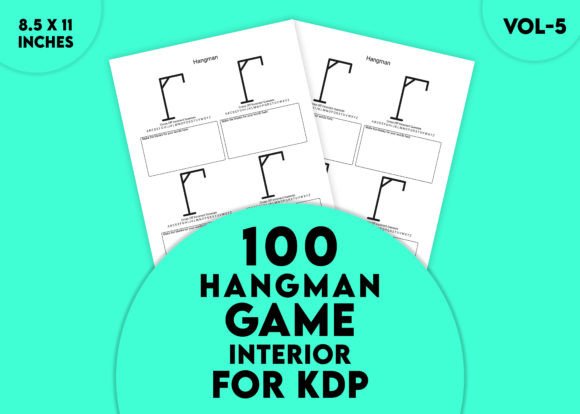
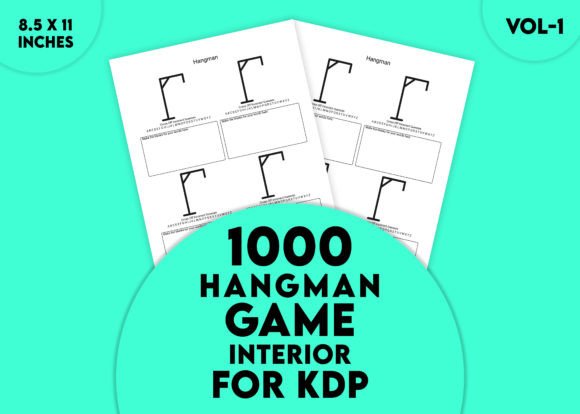
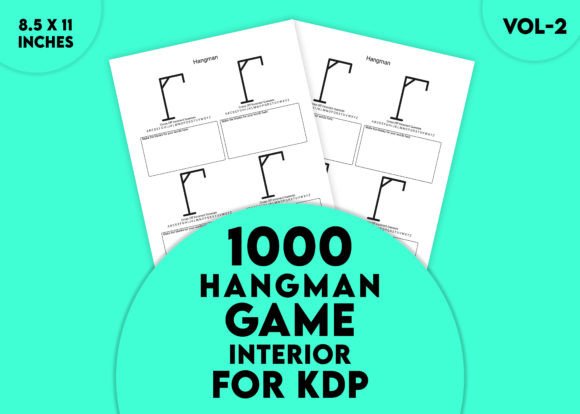
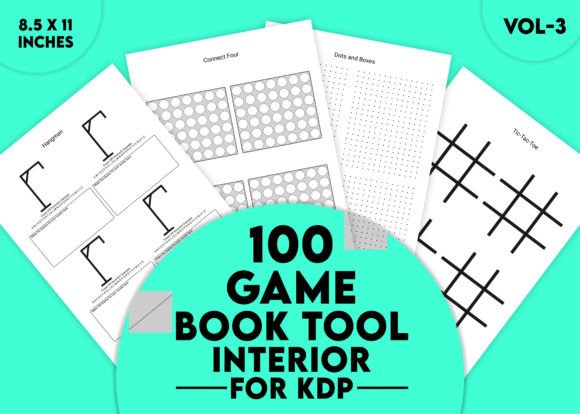
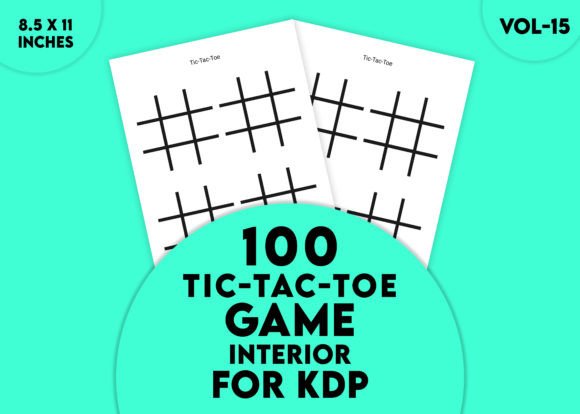
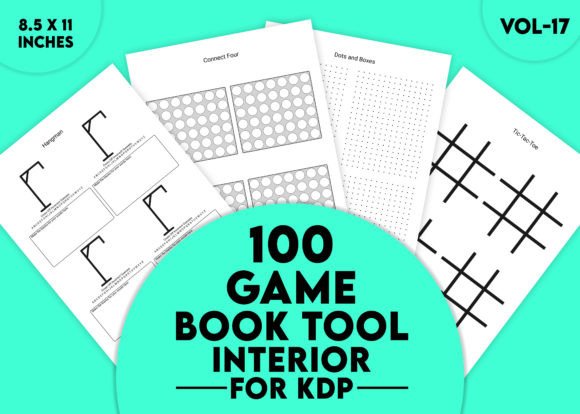
At its core, this product provides a complete, print-ready interior file formatted for a 100-page game book. The trim size is fixed at 8.5 x 11 inches, mirroring standard letter paper. Once you purchase or download it, you can insert your own cover design and publish the assembled book via Kindle Direct Publishing (KDP). The interior is not a collection of random activities; it focuses on four classic pen-and-paper games: Connect Four, Dots and Boxes, Hangman, and Tic-Tac-Toe.
Each game has its own section with dedicated pages. Connect Four is a two-player strategy game where opponents aim to line up four of their colored discs in any direction. Dots and Boxes challenges players to draw lines and claim squares by completing boxes, with the winner holding the most squares. Hangman is a solo-friendly word-guessing game where incorrect letters build a stick figure. Tic-Tac-Toe delivers a quick, grid-based duel where the first player to complete a row of three symbols wins.
This volume, as the "Vol-17" designation suggests, is part of a larger series of game book interiors. It is designed exclusively for KDP publishers who want to offer a physical activity book containing these specific games, all neatly organized and formatted for a crisp print experience.
Who Might Find This Interior Worthwhile?
Your interest in this tool will largely depend on your publishing strategy. The most obvious user is a KDP author who already understands the low-content book model and wants to speed up production. Instead of spending hours setting up grids, dotted pages, or hangman scaffolds in design software, you can use this interior as a turnkey foundation. This is particularly helpful if you are not an experienced graphic designer but still wish to publish a professional-looking book.
It also suits creators who want to build a series. If you plan to release multiple game compilations under a single brand, a consistent interior template can be valuable. The standardized layout helps maintain a predictable customer experience, which can encourage repeat purchases. Additionally, if you are testing the market for classic game books and want to see if titles like "Family Game Night Activity Book" will sell, using a pre-made interior minimizes the upfront time investment before you validate demand.
When the Game Book Tool Interior May Not Be the Ideal Choice
Despite its convenience, this product is not a one-size-fits-all solution. If you intend to create a book with a strong thematic or branded visual identity, a generic template might clash with your vision. The interior is likely neutral in design, which works for broad appeal but lacks custom illustrations, quirky font treatments, or themed borders. Readers looking for a "pirate-themed" or "woodland animals" game book may find an off-the-shelf interior feeling a bit plain.
Publishers who need flexibility in page count should also be cautious. The interior is built around 100 pages, and altering that structure usually requires editing the source file. If your game selection demands 120 pages for a better flow, or if you want to add answer keys or extra blank pages, you might spend as much time modifying this interior as you would building one from scratch. Similarly, if you want to include games beyond the four provided—such as Battleship, Mazes, or Sudoku—you will need to piece together additional files or create a hybrid interior, which can disrupt the visual consistency.
Furthermore, the 8.5 x 11 inch format, while excellent for spacious gameplay and easy writing, may not suit every customer's preferences. Some buyers favor more portable 6 x 9 inch puzzle books for travel. If your niche gravitates toward compact sizes, a letter-sized interior could mismatch expectations, leading to returns or lower reviews.
Key Benefits and Practical Trade-offs
Choosing a pre-made interior is fundamentally a decision to trade some creative control for efficiency. The primary benefit here is time savings. You can go from concept to published book in a remarkably short period, focusing your energy on market research, keyword optimization, and cover design—the elements that often drive discoverability. The interior is likely tested for print quality, reducing the risk of formatting errors that can plague self-made KDP files. This can save you from the frustration of margins cutting off content or lines fading near the gutter.
However, you also accept that other publishers might use the same interior. If multiple sellers list an identical interior under different covers, price competition can intensify, and Amazon may eventually flag the content as a poor customer experience if customers notice duplicated interiors. To mitigate this, you will need to inject value through a unique cover, compelling description, or perhaps a bonus element that you add separately, such as a downloadable scorecard or a companion website.
From a cost perspective, purchasing a single interior for commercial use is generally affordable, but you must verify the licensing terms. Some interior sellers restrict the number of copies you can sell, while others offer unlimited use. Make sure the license allows for KDP distribution without an additional royalty fee. If the license is overly restrictive, the long-term value dissipates quickly.
Print Quality and User Experience Considerations
Since the book is meant to be written in, paper bleed and page layout matter enormously. The 8.5 x 11 inch size provides ample room for children or older adults to comfortably mark their X's and O's or draw lines between dots. No bleeding edge designs are needed because the games are line-art based, which simplifies the printing process and keeps interior files lightweight. Still, verify that the margins are appropriate for KDP's trim requirements. A well-prepared interior will leave enough breathing room near the binding so that left-hand pages don't sacrifice usability.
For each game, check whether the number of allocated pages truly satisfies the intended audience. One hundred pages can disappear quickly when spread across four games. If Hangman gets 25 pages, but each page contains only one puzzle, a child might finish the book in a single vacation day. That could translate into a "value for money" complaint from parents. The more successful game books often pack multiple puzzles per page or arrange layouts to maximize usage without feeling cramped. As you evaluate Vol-17, focus on how densely each page is utilized.
Another subtle point concerns the clarity of the rules. When families play these classic games, they often already know the instructions. But if the book lacks a brief, well-worded rule section, you might alienate a younger audience or a gift buyer who expects a self-contained product. Consider whether you will need to supplement the interior with your own instructions page, and whether the file allows for that insertion without breaking the layout.
Differentiating from Competitive Offerings
The term "Game Book Tool Interior for KDP Vol-17" indicates it isn't the only version on the market. Before committing, compare it with similar interiors available on creative marketplaces. Some alternatives offer higher page counts, different game mixes, or editable source files that let you tweak colors and fonts. Others bundle cover templates, which can further streamline your launch. Your decision should be based on the specific combination of games included here. Connect Four, for example, often appears less frequently in generic puzzle books than Tic-Tac-Toe. The presence of a dedicated Connect Four section might help you position the book as suitable for all ages or family reunions, where a larger playing grid is a distinctive feature.
Practical Insights for Making a Confident Choice
To decide if this interior fits your project, start by defining who your buyer is. If you imagine a grandparent buying a boredom buster for a long car trip, a large-format spiral-bound activity book with these four games can be a strong offering. If, however, your audience is a classroom teacher looking for reproducible worksheets, the single-use book format might feel wasteful; a collection that includes permission to photocopy pages could be a more appropriate alternative.
Also, reflect on how much customization you truly need. If you simply want a clean, ready-to-publish game book and you plan to invest your effort into marketing and advertising, the Game Book Tool Interior for KDP Vol-17 is a functional choice that gets the job done. But if your brand relies on a highly distinctive visual style, or you need to add a significant amount of original content beyond these four games, you may be better served by commissioning a custom interior or creating your own from scratch. The extra upfront work can pay off in the form of a completely unique product that stands out in a crowded category.
Finally, always test the print outcome before publishing. Order a proof copy early and use a pencil or pen on every game page. Feel whether the paper and spacing work together. A template might look perfect on screen, yet reveal awkward gutter margins or overly thin lines that reproduce poorly. This hands-on test is your most reliable decision-making tool.