Evaluating a Workout Log KDP Ready Interior for Your Self-Publishing Business
Entering the low-content and medium-content publishing space on Amazon KDP often begins with finding a reliable, print-ready interior file. A Workout Log KDP Ready package that also includes a chess tactic journal offers an intriguing starting point for creators who want to test multiple niches without designing from scratch. This article examines what such a product entails, how it fits into a publishing strategy, and which factors you should weigh before using it.
What a Workout Log KDP Ready Product Actually Is
In the KDP ecosystem, an interior file is the designed layout that fills the pages of a paperback. A Workout Log KDP Ready bundle typically provides pre-made interiors for journals and log books—in this case, a fitness tracker and a chess tactic journal. The seller often delivers multiple file formats: a high-resolution PDF for direct upload, editable SVG or AI files for customization, and sometimes JPEG or PNG pages for previews. The core promise is that the file has been tested on KDP and meets basic trim size and margin requirements, reducing the technical friction for new publishers.
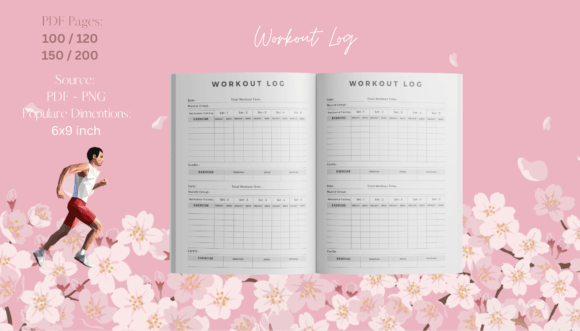
The package under review specifies a 6 x 9 inch trim, no bleed, and page count options ranging from 100 to 200 pages. These are standard choices that work well across many Amazon marketplaces. The inclusion of a chess tactic log book alongside a workout log suggests the publisher wants to target two distinct audiences: fitness enthusiasts and chess improvers. For someone new to KDP, this dual-niche approach can be a cost-effective way to learn the ropes without committing to a single category.
Why Creators Consider Ready-Made Interiors
Time and design ability are the two most common constraints for aspiring KDP publishers. Designing an interior from scratch—even a simple lined or grid layout—requires software knowledge and an understanding of KDP’s bleed and gutter settings. A ready-made interior removes that barrier. You can download the file, verify it against Amazon’s latest guidelines, and upload a book within hours. For a workout log, the value lies in having structured tables, exercise tracking prompts, and date sections already organized. For a chess tactic journal, it might include well-proportioned diagrams, move notation spaces, and analysis sections that would take a non-chess player considerable research to build.
Cost is another motivator. Custom interior design work can run anywhere from fifty to several hundred dollars per title. A pre-designed bundle often costs a fraction of that. If your goal is to rapidly iterate across multiple niches—launch a fitness log, a chess journal, perhaps adapt the design into a habit tracker or other log book—a flexible set of editable files gives you a foundation to modify.
Benefits of a Dual-Niche Interior Package
The combination of a workout log and a chess tactic journal in one package delivers a few practical advantages. First, it lets you test two distinct audiences with minimal upfront effort. The fitness log market is broad but competitive; the chess niche is smaller yet often has highly engaged buyers. Running both simultaneously can reveal which audience responds better to your keywords, cover designs, and pricing. Second, because the interiors share the same trim size and bleed settings, you standardize your production process. The learning curve flattens: once you successfully upload one 6 x 9 book, the second becomes almost mechanical.
From a design perspective, a quality interior should include structural elements that guide the user. For the workout log, you might expect dated entry blocks, exercise name fields, set and rep counters, and progress notes. For the chess journal, notations for player names, event details, move columns, and commentary sections are essential. A well-built file will have these components clearly laid out and easy to read. If the package offers editable SVG or AI files, you can further tweak the prompts, font styles, or page decorations to align with a specific sub-niche—say, a yoga log or a chess opening repertoire tracker.
Tradeoffs and Considerations Before You Buy
While ready-made interiors eliminate design work, they also introduce the risk of market saturation. If many other publishers use the same file without meaningful customization, the interiors will look identical, differentiating only through covers. This can pressure profit margins and make it harder to build a brand. For the workout log, consider whether you can add unique elements—introductory pages, goal-setting sections, instructional content—that set your version apart. The editable files become crucial here; without the ability to modify, you may be selling the same book as dozens of competitors.
Another factor is the quality of the file output. KDP’s print process has specific requirements for image resolution, font embedding, and margin consistency. A description that says “tested on KDP” is reassuring, but you should still run a print preview through Amazon’s online tool. Watch for page curl, text cut-off, or alignment shifts. The no-bleed specification simplifies this, but it’s wise to assume you will need to do a proof copy order before scaling up ad spend.
Editable files like AI or SVG are only useful if you own compatible software and have the skill to edit them. If you plan to tweak the interior substantially, factor in the time to learn the tool or the cost of hiring someone. For many beginners, the PDF alone may be sufficient, but that limits your ability to differentiate.
When This Type of Product Is a Strong Fit
A Workout Log KDP Ready interior paired with a chess journal fits certain publisher profiles particularly well. You are likely an ideal user if:
- You want to publish your first few low-content books quickly to understand the KDP workflow.
- You have a tight budget and cannot invest in custom design yet.
- You plan to test multiple niches and are comfortable tweaking editable elements to create variations.
- You already have strong ideas for covers, keywords, and marketing, and just need the interior to complete the package.
- You are building a series of themed journals and need a consistent interior template as a base.
In these scenarios, the convenience of a download-and-upload solution outweighs the risk of nondifferentiation. You can treat the interior as a foundation and later invest in custom design once you validate that a niche has demand.
When an Alternative Approach May Be Worth Considering
Ready-made interiors are not the only path, and in some situations they may not be the best one. Consider other options if:
- You have a strong, unique concept for a workout log that requires specialized tracking charts, habit systems, or educational content far beyond a generic template.
- You want full control over typography, paper utilization, or innovative layout features that a pre-built file cannot accommodate.
- You are building a long-term brand identity and need exclusive, recognizable interiors that no competitor can copy.
- You already possess intermediate graphic design skills and can create your own files relatively quickly.
- Your budget allows hiring a designer to craft something unique, and you anticipate higher margins that will recoup the investment.
In these cases, starting with a blank canvas or a high-level template (such as a KDP-approved InDesign or Publisher file) and building from scratch may yield a more differentiated product. Some publishers also choose to use a simple lined or dot-grid interior with no niche-specific elements, which can work across many journal types but may not stand out in crowded search results.
Practical Decision-Making Insights
When evaluating any Workout Log KDP Ready or chess journal interior, focus on these practical points to make an informed choice:
File availability and licensing: Check whether the license permits commercial use and unlimited print runs. Some sellers restrict the number of copies you can sell, which can cause issues later. Ensure the formats offered match your editing capabilities. If you do not own Adobe Illustrator, the AI file holds little value; you might be better served by a well-organized PDF and PNG set.
Page count flexibility: The description mentions 100, 120, 150, and 200-page versions. Consider whether you need a single size or multiple variations. A longer log book may appeal to serious users but costs more to print, affecting your royalty calculation. Shorter books can be priced lower to attract volume. Having options lets you A/B test without redesigning the interior entirely.
Niche synergy: Ask yourself if you will genuinely use both the workout log and the chess journal. If your brand is strictly fitness, the chess component may be an unnecessary add-on. However, if you are building a variety publishing brand, the package can serve as a low-risk entry point into a niche you might otherwise overlook.
Cover design complement: Remember that on Amazon, the cover is the first thing customers see. Even a plain interior can sell well if the cover is compelling and targets the right keywords. Factor in the cost or time needed to create a professional cover for each book. A strong interior paired with a weak cover will not perform to its potential.
Customer experience and reviews: Low-content books live and die by usability. A workout log that lacks sufficient space for notes, or a chess journal where the notation area is cramped, can lead to negative reviews. Before publishing, print a physical proof and fill out a few pages yourself. If something feels off, use the editable files to adjust spacing or prompt text. Small improvements can significantly boost perceived quality.
Ultimately, a Workout Log KDP Ready bundle that includes a chess tactic journal functions as a launch accelerator. It lowers the barrier to entry and lets you ship products quickly. But it is not a set-it-and-forget-it solution. The most successful publishers using these tools treat them as a starting point, layering on unique covers, thoughtful branding, and targeted keyword strategies. Approach the product with clear eyes: if your goal is speed and low initial cost, this is a viable path. If your goal is long-term differentiation and premium positioning, factor in the extra steps you will need to take beyond the basic interior.
For those still weighing options, consider ordering a print proof of your first book before uploading more titles. See how the paper feels, how the text sits on the page, and whether the binding holds up. That single step can inform whether the interior file meets your expectations or requires further editing. A small investment in testing pays dividends in customer satisfaction and return rates.
Whichever direction you choose, the availability of well-specified, KDP-tested interiors makes today’s self-publishing landscape more accessible than ever. By evaluating the tradeoffs honestly and planning your customization strategy, you can make a decision that supports both your short-term publishing activity and your long-term business goals.