How the Tic-Tac-Toe Interior for KDP Vol-19 Simplifies Your Publishing Pipeline
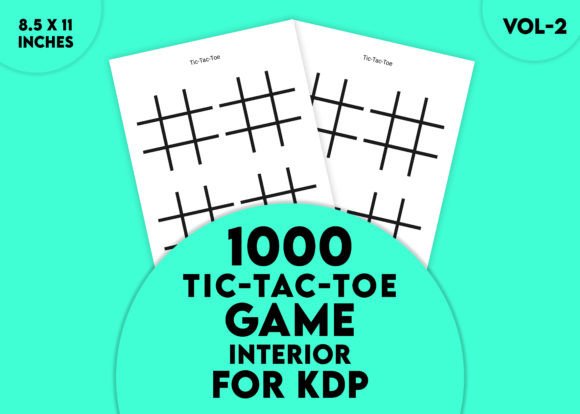
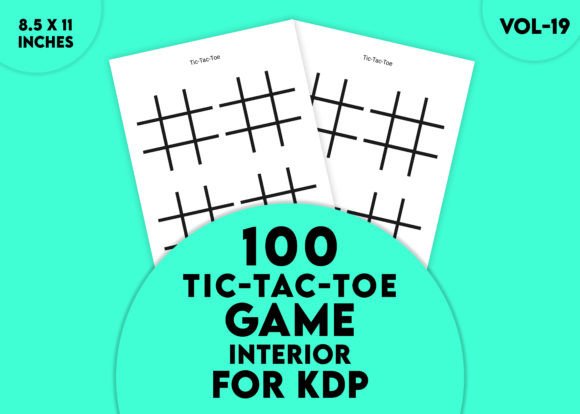
Creating a low-content book that feels finished and professional often takes more time than expected. Margins shift, page layouts break, and what looked fine on screen prints poorly. The Tic-Tac-Toe Interior for KDP Vol-19 exists to remove that friction. It is a pre-built, editable PDF template sized at 8.5 x 11 inches — a standard letter format that fits Amazon’s print-on-demand specifications — with 100 pages, each holding four neatly arranged tic-tac-toe grids. Instead of designing boards from scratch or manually copying assets across dozens of pages, you start with a file that has already solved layout, spacing, and bleed concerns. The real value is not just the design; it is the time reclaimed for other decisions that matter more, like cover design, category research, or bundling strategies.
Where This Interior Fits in a Broader Publishing Process
Most low-content book projects follow a predictable sequence: research a niche, source or create an interior, build a cover, upload to KDP, order a proof, and launch. The interior file often becomes a bottleneck. Even a simple game sheet requires careful alignment so that nothing gets trimmed off during printing. When you’re aiming for a clean, repeatable look, inconsistencies across pages erode buyer confidence. The Tic-Tac-Toe Interior for KDP Vol-19 slots into the creation phase as a ready-made backbone. Instead of spending hours in design software adjusting guidelines, you take the editable PDF and immediately verify that margins, trim lines, and grid placements align with KDP’s requirements. From there, you can leave it as-is, tweak fonts, add a title header, or overlay light branding. This allows the publication timeline to compress from days to hours without sacrificing output quality.
Integrating the Template With Your Existing Tools and Workflows
Because the file arrives as an editable PDF, it plays well with a range of applications. You might open it in Adobe Acrobat Pro to make text adjustments directly, or import it into Affinity Publisher, InDesign, or even Canva if you need to add a page frame or a small instructional note at the top. The key is that you are not starting from a blank canvas; you are refining a validated structure. This compatibility also matters when working with freelancers. If you outsource formatting or cover matching, you can hand off a template that already respects safe zones. There is less back-and-forth about margin corrections because the base document was built with 8.5 x 11 inch trim dimensions in mind — a standard that most formatting partners understand intuitively.
Beyond the design tools, consider how this interior interacts with your product planning spreadsheet. A single template can generate multiple variations. Change the title page or a subtle background pattern, and you have a new SKU ready for a different niche: “Travel Tic-Tac-Toe”, “Math Teacher’s Tic-Tac-Toe”, “Couples Game Night Tic-Tac-Toe”. The consistent grid structure keeps production predictable while you focus on positioning and marketing angles.
Preparation and Setup: What to Check Before You Upload
Using a pre-made interior does not mean skipping the technical checkpoints. Open the file and confirm the bleed settings are still intact if you added graphics near the edges. With 100 pages and four games per page, you get 400 playable boards — enough substance for customers to feel the book has real volume, yet light enough to keep the file size manageable. Before uploading to KDP, run through these practical checks:
- Safe Zone Verification: Ensure that all grid lines sit well within the 0.375-inch margin from the trim edge. The template already accounts for this, but any added text, headers, or page numbers should stay inside that boundary.
- Print-Ready Resolution: If you add artwork or logos, confirm they are at least 300 DPI. Vector elements within the PDF will scale cleanly, but raster images need proper resolution to avoid blur.
- Page Count Consistency: The 100-page count should match what you list in your KDP product details. This balance of value and cost keeps the paperback printing fees reasonable while giving the buyer a satisfying thickness.
These steps take minutes, not hours, precisely because the foundational layout is already sound. You’re performing quality assurance, not redesign.
Workflow Example: From Template to Live Listing in a Single Afternoon
Imagine a small business owner who wants to expand a puzzle book series. They already have a cover template for an 8.5 x 11 inch book and understand how to create A+ Content. With the Tic-Tac-Toe Interior for KDP Vol-19, the morning might look like this:
- Duplicate the editable PDF and rename it for the new project.
- Add a simple “Fun for All Ages” header on the first page using a free font.
- Export a flattened PDF following KDP’s specifications — still 100 pages, 8.5 x 11 inches, with trim marks removed.
- Open the KDP dashboard, start a new paperback, and upload the interior along with the pre-prepared cover.
- Use the online previewer to flip through a handful of pages, checking for any clipping.
- Submit for review and order a physical proof.
The entire interior preparation consumes under an hour, even with careful inspection. That speed allows the creator to spend more time on keyword research, comparing competitor reviews, and crafting a product description that highlights the book’s clean layout and generous number of games. The process shifts from “design everything manually” to “configure, verify, and launch.”
Maintaining Consistency Across Multiple Volumes
Series branding often falls apart when each book’s interior looks slightly different due to manual rebuilds. With the Tic-Tac-Toe Interior for KDP Vol-19, grid spacing, line weight, and margin distance remain uniform across every edition you create. If you later release Vol-20 or a themed bundle, customers who buy multiple books will experience visual continuity — a subtle trust signal that suggests a professional operation rather than a one-off experiment. You can intentionally vary cover designs and title fonts while keeping the gameplay pages identical, a practice that builds a recognizable product line.
This consistency also helps with customer reviews. When buyers know exactly what to expect from the interior formatting, they are less likely to leave feedback about misaligned lines or cut-off content. Positive reviews then focus on the enjoyment of the game itself, not on production quality complaints.
Long-Term Efficiency and Repurposing
An editable PDF does not need to live in only one book. The same template can be adapted for different use cases beyond typical KDP releases. For instance, you might extract a single page and use it as a free lead magnet — a printable PDF of four tic-tac-toe boards to collect email addresses. Or you could add a short tutorial page at the beginning and turn it into a classroom resource sold on platforms like Teachers Pay Teachers. The 8.5 x 11 inch size prints easily on any home or office printer, making the interior useful for physical downloadables as well.
When viewed as an asset rather than a one-off product, the template’s return grows. Educators may print a few pages for a quick classroom activity. Parents may keep a copy in a binder for road trips. A coach might use the grids for a team-building exercise where each square represents a challenge rather than a simple X or O. The structure supports creative reinterpretation without additional design overhead.
Organizing Files and Version Control
If you produce several low-content books, file sprawl becomes a real problem. A practical habit is to keep a master folder with the original editable PDF, then create subfolders for each derivative: “TicTacToe_Vol19_Master.pdf”, then “TicTacToe_FamilyEdition.pdf”, “TicTacToe_AnimalTheme.pdf”, and so on. Maintain a simple log inside each folder noting which fonts were added and what minor design changes were made. This small documentation step prevents the need to open multiple files just to recall what you altered. The time invested in organization pays back when you return to the series six months later and need to create a new volume quickly.
Quality Control and Print Proofing Insights
Even with a template built for KDP, physical proofs reveal things a screen can’t. Order a proof copy and pay attention to the tactile experience: does the paper feel substantial enough for a game book? Is the ink coverage uniform across the grids? Check that players can comfortably write Xs and Os inside the squares without the lines being too thick or too faint. If you find the grid lines appear too light on cream paper, you can darken them slightly in the editable PDF and re-upload. Because the template contains vector linework, this adjustment is non-destructive and easy.
Also verify the alternate game placement. With four games per page, two on the top half and two on the bottom, ensure there is enough visual separation so that a player does not accidentally mark the wrong board. This layout choice — four per page — offers a good balance between paper economy and usability. Too many games per page would make each grid too small; too few would waste space and increase page count without adding value. The template strikes that balance, but you should confirm it holds in the printed version under real pencil or pen pressure.
Strategic Considerations for Different Audiences
The users of your finished book may range from children to seniors, and the uncluttered tic-tac-toe layout serves them all. If you want to target a specific demographic, small additions can go a long way. For example, adding a faint-dot grid in the corner of each page for scorekeeping appeals to competitive players. For a mindfulness journal crowd, you might insert a short grounding prompt above each board: “Take a deep breath before placing your first X.” These tweaks are possible precisely because you are not locked into a rigid, uneditable file. The editable nature of the PDF supports gentle customization without breaking the underlying structure.
Marketers and bloggers can also use the interior to create bonus content. A travel blogger might bundle a printable version of the book with a guide to road trip games, while a productivity coach might reframe tic-tac-toe as a quick decision-making tool — using X and O to weigh pros and cons visually. The foundational product remains the same clean grid, but its application expands when you treat the template as a flexible resource.
Making the Decision: When to Use a Pre-Built Interior
Investing in a template like this makes the most sense when your primary goal is execution speed, consistency, and a reduced chance of technical rejection from KDP. If you are testing a new niche and want to publish quickly to gauge demand, starting with a formatted interior removes a major variable. If you are scaling a catalog of puzzle books, using the same underlying template cuts down on per-unit effort and creates a cohesive brand look. Even if you have design skills, the hours you save can be redirected toward market research, advertising, or writing a more compelling product description — activities that often generate more revenue than custom-drawing another set of parallel lines.
The 100-page count and 8.5 x 11 inch dimensions also align well with customer expectations for an activity book. Shoppers browsing Amazon recognize that size as typical for workbooks, and the page count signals value without excessive bulk. The four-games-per-page layout ensures that no page feels empty, which in turn improves the preview experience when potential buyers use the “Look Inside” feature. A full, well-organized interior suggests thoughtfulness, which can nudge someone toward a purchase over a competing listing with sparse, poorly aligned grids.
Ultimately, the Tic-Tac-Toe Interior for KDP Vol-19 functions as a shortcut that does not compromise quality. It condenses layout planning, margin calibration, and page duplication into a single download. From there, you are left with the work that actually grows a publishing business: refining your offer, understanding your buyer, and putting the book in front of the right audience.