Why a Diesel Truck Maintenance Log Book Saves More Than Just Repair Records
Every diesel truck owner eventually faces the same quiet frustration. You open the glove box looking for that oil change receipt from three months ago, and it is either faded, missing, or buried under a stack of unrelated papers. A Diesel Truck Maintenance Log Book changes that pattern completely. It is not just a notebook. It is a structured system that tracks every service interval, fluid change, and unexpected repair across the life of your vehicle. When you keep clean, dated records, you protect resale value, simplify warranty claims, and catch mechanical issues before they become roadside emergencies.
But the real value goes deeper. A well-designed log book helps you spot trends that scattered receipts cannot show. You might notice that fuel filter replacements are creeping closer together, which points to a developing fuel quality problem. You might see that brake pad life is shorter on one axle, hinting at a caliper dragging. These insights only surface when data lives in one place. That is why people search for a dedicated log book rather than grabbing any blank notebook off the shelf. The structure matters as much as the habit of writing things down.
What Most People Get Wrong Before They Even Start
A common mistake is treating vehicle maintenance like something you will remember. You will not. Not across years of ownership, not across multiple trucks if you run a small fleet, and certainly not when a buyer asks for service history five minutes before you list the truck for sale. Memory fails exactly when you need it most. Writing things down is the obvious fix, but how you write them down determines whether those records stay useful.
Many owners grab a spiral notebook and scribble dates and mileage with no consistent format. Six months later, they cannot tell whether "filter change" meant the oil filter, fuel filter, or air filter. Pages get torn, coffee spills, and the whole system falls apart. The fix is using a purpose-built Diesel Truck Maintenance Log Book with clearly labeled sections for date, mileage, service type, parts used, and cost. When the layout does the organizing for you, consistency becomes automatic rather than something you have to discipline yourself into.
Overlooking What a Good Interior Layout Actually Provides
Not all log books are created equal, and skipping past the interior design details is a mistake that costs time later. Some products offer only a few lines per entry with tiny boxes that force you to abbreviate everything into cryptic notes. Others lack space for part numbers, which means you are hunting through old receipts every time you need to reorder filters or fluids.
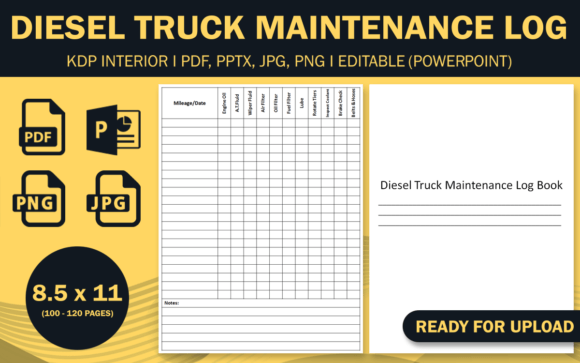
What you want is space to write clearly without cramping. The download package that includes 100 and 120 pages of interior options gives you flexibility based on how frequently you service your truck and how long you plan to keep the vehicle. With more pages, you are not rationing entry space or worrying about running out mid-year. You can log every fuel fill-up, oil analysis result, and tire rotation without hesitation. That level of detail becomes invaluable when diagnosing intermittent problems or proving maintenance compliance for a warranty adjuster.
Choosing a Format That Fails Your Workflow
Another overlooked detail is format flexibility. You might buy a pre-printed log book, fill half of it, and then realize you wish you could adjust the column widths or add a section for DEF fluid tracking. With a fixed printed book, you are stuck. That is why having access to an editable source file matters more than people initially realize.
The PowerPoint PPTX file included in this particular download lets you customize pages before printing. Maybe you want to add your company logo, adjust the service interval checklist, or create a dedicated section for trailer maintenance alongside the truck records. You can make those changes once and then print fresh copies whenever needed. This kind of flexibility is especially useful for small business owners who want branded maintenance logs for their fleet vehicles or for mechanics who want to provide clients with a personalized record-keeping system.
Why Print-Ready Files Save Hours of Headache
Some people download a design and then spend an afternoon fighting with printer settings, margins, and bleed lines. The frustration is real. You get excited to start organizing your maintenance records, and instead you are watching YouTube tutorials on how to format PDFs for print. The package with PDF files tested on KDP removes that entire friction point. Whether you want to print at home, take the file to a local print shop, or even publish your own version through Kindle Direct Publishing, the files are already set up correctly.
The 8.5 × 11 trim size with no bleed is a practical choice. It matches standard printer paper, so you are not hunting for odd-sized refills or dealing with binding issues. Each page prints cleanly edge to edge in the printable area, and the larger format gives you room to write without feeling cramped. For a maintenance log, legibility months or years later is the whole point. Small pocket-sized books look convenient but become useless when you need to read old entries under poor garage lighting.
The Mistake of Ignoring Visual Quality
There is a quiet benefit to using something that looks professional. When a log book feels substantial and well-designed, you treat it with more care. You are less likely to toss it under a seat or use it as a coffee coaster. The inclusion of high-resolution JPG and PNG files in this download means every printed page is sharp and clean, with no fuzzy text or pixelated borders. That visual clarity makes reading old entries easier and gives the whole system a sense of permanence.
For people who sell their trucks privately, a crisp, well-kept maintenance log becomes a negotiation tool. You hand the buyer a book that shows every service, every fluid change, every repair. It communicates that you cared about the truck. Buyers pay more for that confidence. A crumpled pile of receipts does not have the same effect. Presentation matters, even for something as utilitarian as vehicle records.
Underestimating How Many Pages You Really Need
One of the quiet regrets people have is buying a log book with too few pages. A diesel truck that sees daily use or heavy towing might need oil changes every 5,000 to 7,500 miles, fuel filter replacements every 10,000 to 15,000 miles, and additional entries for transmission services, coolant flushes, differential oil changes, and unexpected repairs. A 50-page log book runs out fast.
With 100 and 120-page interior options, you have room to document years of service without switching books. That continuity is valuable. If you ever need to trace a recurring issue, you want all the data in one place. Splitting records across multiple books or switching formats mid-stream creates gaps. It is a small detail that has a big impact on how useful your records are when you actually need them.
Using Generic Templates That Miss Diesel-Specific Needs
Many generic vehicle log books are built for gasoline engines and skip over diesel-specific service items entirely. There is no space for diesel exhaust fluid tracking, no mention of turbocharger inspections, and no section for fuel water separator draining schedules. Diesel engines have different maintenance rhythms, and your log book should reflect that.
When you can edit the source file, you solve this problem directly. Add a recurring checklist for DEF top-offs. Create a section for DPF regeneration tracking if your truck sees a lot of short trips that could lead to filter loading. Include glow plug replacement intervals. The editable PowerPoint PPTX format means you are not locked into a one-size-fits-all approach. You shape the log book to fit your specific truck, driving conditions, and maintenance philosophy.
Skipping the Pre-Decision Checklist
Before you commit to any maintenance log system, there are a few things worth checking. First, confirm the file types actually open on your devices. A PPTX file requires PowerPoint or compatible software like Google Slides or LibreOffice. The PDFs need a PDF reader, which nearly every device handles natively. The JPG and PNG files are universally viewable for quick reference or sharing.
Second, think about how you will actually use the log book day to day. Will you keep it in the truck, in the garage, or both? If it lives in the truck, consider protecting printed pages with a simple clear cover or keeping the PDF on a tablet as a backup. If it stays in the garage, mount a clipboard nearby so entries happen immediately after service, not three days later from memory.
Third, decide on your printing method. Home printing works fine for single copies and gives you control over paper quality. For something more durable, a print shop can bind the pages with a spiral or comb binding that lays flat while you write. You can also upload the KDP-tested PDF and order a professionally printed copy through Amazon. Having options means you are not locked into one outcome.
Making the Habit Stick Without Overcomplicating It
The best maintenance log in the world does nothing if it sits empty. The trick is lowering the barrier to entry so small that recording a service takes less than a minute. Keep a pen clipped to the log book. Pre-print your most common service types on sticky notes or page tabs so you can flip right to the right section. If you have multiple diesel trucks, use one log book per vehicle rather than jumbling everything together.
Some owners pair the physical log with a quick phone photo of each entry as a cloud backup. It takes three seconds and gives you a searchable image if the physical book ever gets damaged. None of this is complicated, but it is the kind of small, smart behavior that separates trucks with complete, trustworthy histories from those with unknown pasts.
A Diesel Truck Maintenance Log Book with editable files, print-ready PDFs, high-resolution interiors, and flexible page counts is more than a purchase. It is the start of a system that protects one of the most expensive investments you will make. The download checks the practical boxes, but the real value comes from using it consistently and tailoring it to your needs over time.