Master Cattle Record Keeping for Better Herd Management
Every thriving cattle operation runs on more than just feed, water, and pasture. It runs on information. The difference between guessing and knowing often comes down to a simple habit: consistent, thoughtful cattle record keeping. Whether you manage a handful of homestead cows or a commercial herd, the act of documenting daily details transforms your approach from reactive to strategic. It’s not about paperwork for paperwork’s sake—it’s about building a living history of your animals that helps you make faster, smarter decisions when it matters most.
What makes cattle record keeping so compelling is how it bridges the gap between instinct and evidence. Good records reveal patterns you might otherwise miss: a particular cow that always calves early, a sire whose offspring consistently thrive, or a seasonal dip in weight gain that lines up with a specific pasture rotation. When you track breeding dates, health interventions, and growth milestones, you start to see the story behind each animal. That story becomes your most valuable management tool, far more reliable than memory alone.
Why Cattle Record Keeping Matters More Than You Think
At its core, cattle record keeping is a decision-support system. It gives you the confidence to cull an unproductive animal, to invest in better genetics, or to adjust your feeding program before problems escalate. Without records, even experienced ranchers fall back on vague impressions. With them, you have concrete evidence of performance, health trends, and financial efficiency. This practice isn’t just for large-scale operations—small producers often see the most dramatic gains because a single animal’s underperformance has a bigger relative impact.
Records also protect your investment. In an emergency, having immediate access to vaccination dates, calving history, and treatment records can save an animal’s life and reduce veterinary costs. For breed registries, fair exhibitions, or direct marketing of beef or breeding stock, detailed documentation builds credibility with buyers. People pay more for animals with a verifiable background. In that sense, your log book isn’t a chore; it’s an asset that grows in value over time.
The Anatomy of a Functional Record-Keeping Log
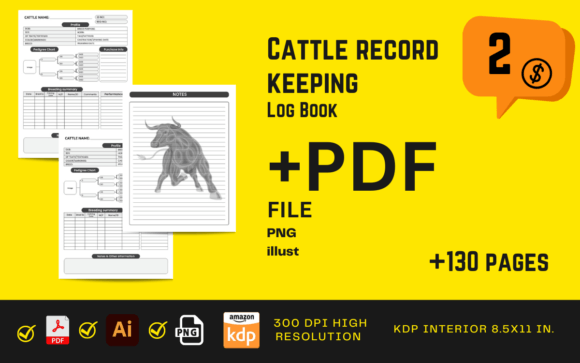
A well-designed log book brings structure to the chaos of farm life. Imagine cracking open a sturdy 8.5 by 11-inch notebook—130 pages dedicated entirely to your herd. Each animal gets a dedicated profile page that captures the essentials at a glance: date of birth, breed, sex, distinctive color markings, horn status, number of teats, testicle condition, tag or tattoo identifiers, and castration or spaying dates. This isn’t just data entry; it’s a snapshot of the animal’s physical identity that helps you avoid mix-ups in the field or chute.
Beyond the basics, the log includes a pedigree chart where you can map out parentage and trace lineage. For anyone serious about breeding, this visual family tree is invaluable. You can quickly reference a cow’s genetic background before selecting a mating pair. The purchase information section is equally handy: jot down the source, date, and any health certifications, so you never scramble through old receipts. Over time, this record becomes proof of biosecurity measures and animal origin.
Breeding and Calving Summaries That Work Hard
One of the most dynamic parts of a dedicated cattle log is the breeding summary table. Column by column, you track the date the cow was bred, which bull she was bred to, the expected calving date, and eventually the actual calving outcome—including calf ID and any complications. This running timeline helps you manage calving seasons, anticipate labor demands, and evaluate bull performance. When you see that a certain bull consistently throws calves with low birth weights and easy deliveries, you know you’ve found a keeper.
Equally important is the space for notes and other observations. This is where creativity meets practicality. Did a heifer reject her calf temporarily? Note it. Was there an unusual weather event during breeding season? Write it down. These marginalia often explain later data spikes and help you avoid misdiagnosing a problem. The freedom to add free-form observations turns a sterile form into a true management journal.
Creative Applications for Modern Cattle Operations
Cattle record keeping isn’t a one-size-fits-all activity. Different producers adapt the same core tool for wildly different goals. A grass-fed beef marketer might use the log to document forage rotation dates and marbling scores, weaving those details into a consumer-facing story about the animal’s life. A hobby farmer with rare heritage breeds might focus on preserving genetic diversity, using the pedigree chart to plan low-inbreeding matings and track conservation metrics over generations.
Some operations blend digital and physical systems beautifully. You can keep the sturdy log book in the barn for immediate, dirt-resistant recording, then later transfer critical data into a spreadsheet or herd management app. This hybrid approach gives you the tactile reliability of paper combined with the analytical power of software. Or, use the physical log as a daily capture tool and take photos of completed pages into cloud storage as an automatic backup. The medium adapts to your workflow, not the other way around.
For educators and agricultural extension agents, a structured log book becomes a teaching tool. 4-H leaders, college livestock programs, and beginner workshops can use the format to instill disciplined observation habits early. When students learn to record birth details, vaccination schedules, and weight checks, they internalize a professional mindset that serves them for a lifetime. The log book isn’t just a product—it’s a curriculum for better animal husbandry.
Designing a System That Works for You
Adopting a comprehensive log does require some initial setup, but the long-term payoff is immense. Start by deciding how you’ll organize the book. Many people assign each animal a dedicated section with its profile page, breeding chart, and notes. You might sort by ear tag number, by birth year, or by pasture group—whichever makes sense during chores. Consistency is key: always record the same details in the same order, so your eyes learn to find information instantly, even in dim light or under pressure.
Make the log part of your routine, not an afterthought. After working cattle, fill in the day’s observations before washing up. This ritual keeps the book current and prevents the backlog that kills most record-keeping systems. If you’re worried about handwriting or mess, remember that legibility matters more than perfection. A smudged note that says “calf #34 off feed” can save you days of worry and a vet call. Over time, your future self will thank you for the clarity.
From Data to Decisions: Practical Insights Hidden in Your Records
Once you’ve accumulated several months or seasons of data, the real magic begins. Flip through the breeding summaries and you might notice that first-calf heifers bred after a certain date consistently calve with more difficulties. That insight could lead you to shift breeding dates or adjust heifer nutrition earlier. Flip through the notes and you may discover that a particular pasture yields lower weaning weights, prompting a soil test or a supplemental feeding trial. The log becomes a research instrument for your own operation.
Financial planning also improves dramatically. By cross-referencing purchase info, vet costs scribbled in the notes, and weight records, you can calculate actual cost per pound of gain or return per cow unit. This isn’t just number-crunching—it’s storytelling that leads to profit. When you know exactly how much it costs to raise a replacement heifer from birth to first calving, you can price her confidently or decide to sell her as a bred female at a premium. Your records turn from history into strategy.
Keeping Your Records Audience-Friendly and Actionable
Think about who else might read your log book. A hired hand, a family member, or a future farm owner all need to interpret your notes quickly. Use clear abbreviations (explain them once in the front of the book) and date every entry. When you record a treatment, note the product, dose, route, and withdrawal period. In the hustle of sick-animal care, these details can be a lifeline. Write with the assumption that someone else will act on your notes years from now—that discipline makes your records practically bulletproof.
For producers who sell directly to consumers, selected records can become part of your marketing. A simple timeline of a steer’s life—birth date, vaccination history, weaning date, finishing program—gives buyers confidence in the meat they’re purchasing. You don’t share every detail, but the existence of thorough records signals a higher standard of care. In an era where transparency sells, your log book is a quiet branding asset.
Adapting the Concept for Small and Large Herds Alike
The beauty of a 130-page, flexible-format log is that it scales. If you run 50 head, you’ll fill pages quickly and appreciate the durable binding that holds up to daily use. If you run five head, the book might last you years, but the depth of information becomes even richer per animal. You can capture temperament notes, udder conformation sketches, or foot structure observations that guide genetic selection with long-term precision. The log grows with your goals.
Entrepreneurial cattle owners can use the breeding and pedigree sections to develop niche markets. Whether you’re raising polled genetics, colored hides, or miniature breeds, a compact family tree and performance history adds tangible value to each animal sold. At auction, on a website, or in a private treaty, the ability to hand a potential buyer a clean, professional summary of an animal’s background sets you apart from 90% of sellers who rely on spotty memory.
Protecting the Integrity of Your Herd’s Story
Records are only useful if they survive. A physical log stored in a zip-lock bag inside a cabinet avoids the risks of dead batteries, crashed hard drives, or forgotten passwords. Yet you can still make digital backups by scanning or photographing key pages monthly. The combination of analog resilience and digital convenience is a powerful failsafe. Your herd’s story is too important to leave in a single format.
Ultimately, cattle record keeping is a practice of respect. It honors the animals under your care by treating their lives as something worth documenting. It sharpens your eye, reduces costly mistakes, and transforms daily chores into a long-term conversation with the land and the livestock. With a thoughtful, well-structured log book at your side, you’re not just feeding cows—you’re cultivating a legacy that gets better every year. The pages you fill today become the foundation for smarter decisions tomorrow, and that’s a return on investment no market can beat.