Hard Mazes for Advanced Puzzlers Vol-10: Not for the Faint of Heart
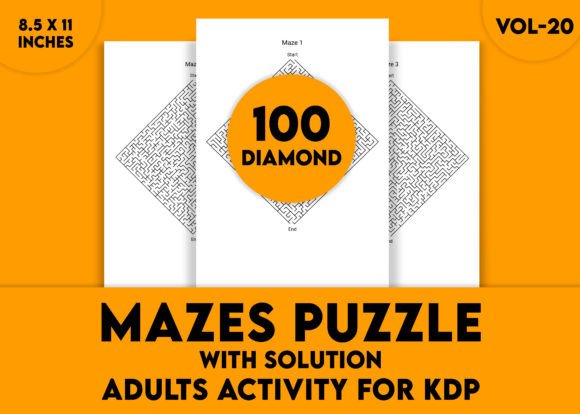
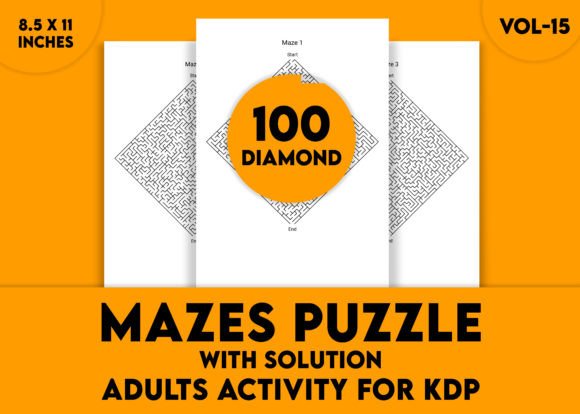
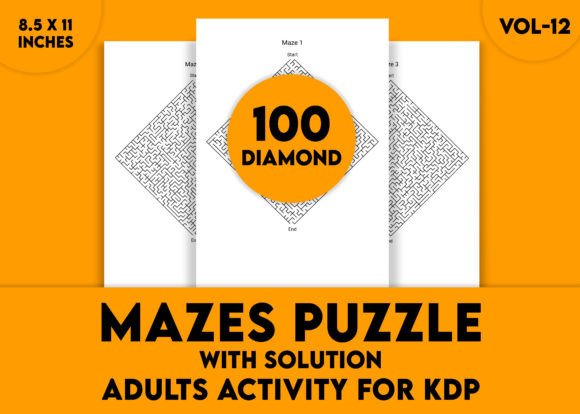
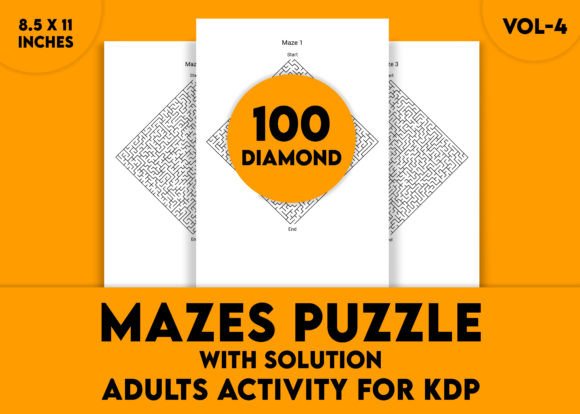
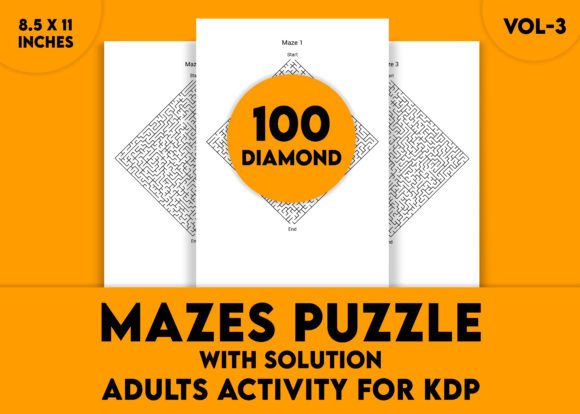
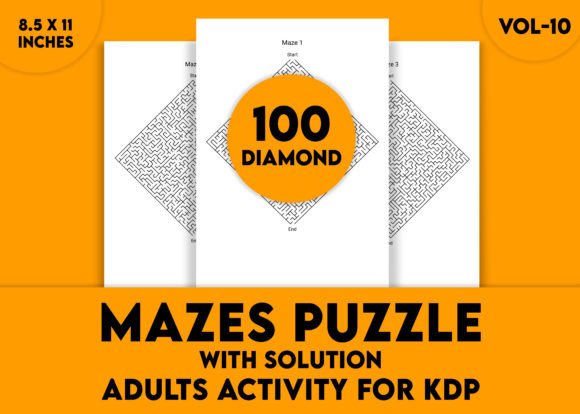
Some puzzles ask for a quick flick of the pen. This one demands a strategy. Hard Mazes for Advanced Puzzlers Vol-10 is a digital collection of 100 dense, winding labyrinths explicitly designed for adults who’ve outgrown the simple kids’ menu. Each maze sits alone on a spacious 8.5×11 inch page, giving your eyes and pencil the breathing room they need when a wrong turn can unravel five minutes of careful progress. You’re not just tracing a line. You’re navigating false exits, deceptive loops, and thickets of intersecting paths that feel almost architectural in their complexity.
What makes this volume stand out immediately is restraint. There are no cutesy characters, no patronizing instructions. The entire PDF operates like a clean, professional design asset. The mazes carry a crisp, almost technical line quality — clear enough to distinguish side channels, yet intricate enough that scanning ahead becomes a genuine mental workout. This isn’t a brain-dump pastime; it’s a deliberate cognitive exercise wrapped in a minimalist layout.
What You’re Actually Getting
Behind the scenes, the product is an editable PDF file, ready to print or modify. You receive 100 full-page maze puzzles, each page featuring one complex maze. After the challenge pages, solutions arrive four to a page — a compact reference that doesn’t waste ink or paper. The file is formatted for standard letter-size sheets, which means no custom trimming and no weird margin battles. The promise of editable means you can add branding, instructions, or personal notes directly into the file before you hit print, making this a pliable addition to a small business toolkit or a customized client giveaway.
The visual personality leans into precision. There’s no distracting background texture, no decorative borders. The black ink lines are bold enough to see under dim office lighting, but fine enough that multiple branches don’t blur into a gray smudge. For anyone who’s squinted at a poorly scanned puzzle book, the difference matters. This is a layout that respects the adult brain’s tolerance for high-density information while still letting you see exactly where you are.
Visual Layout and the Psychology of a Clean Grid
When you spread an 8.5×11 sheet of these mazes on a desk, the first thing you notice is the deliberate use of space. Unlike crammed compilation books that double-column puzzles to save paper, Hard Mazes for Advanced Puzzlers Vol-10 gives each puzzle its own territory. That single-maze-per-page decision isn’t just aesthetics — it’s a nod to cognitive load. Without visual noise from neighboring puzzles, your brain can map the maze topology without fighting peripheral clutter. The white margin acts as a frame, helping you track your start and finish points even after a long session.
From a design perspective, the grid structure underlying the mazes is almost mathematical. Paths run at consistent angles, intersections appear with predictable clarity, and dead ends are visually distinct enough that you learn to scan efficiently. This consistency builds a rhythm. You develop a personal solving language: the quick flick of the eye to detect closed loops, the habit of working backward from the exit, the recognition of structural patterns that repeat across puzzles. That’s a hallmark of well-engineered puzzle design — not just difficulty for its own sake, but a system you can learn to read.
Who Gets the Most Out of These Mazes
This isn’t a book for casual doodlers. The target audience — adults between 20 and 50 who work in creative or analytical fields — will find these mazes particularly resonant. Designers and art directors often treat puzzle books as a mental reset between client revisions. A few solved mazes can untangle a tangled creative block. Entrepreneurs and marketers might stash printed sheets in a break room for quick team de-stressing, or even repurpose a small batch as an engagement tool in a newsletter (a “think you can solve this?” challenge with a branded header). Content creators who run puzzle blogs or printable shops can incorporate the editable PDF into their own product bundles, provided they respect the licensing terms we’ll touch on later.
Crafters and hobbyists use maze books like raw material. A well-designed labyrinth printed on quality cardstock becomes a dinner-table conversation piece or a hand-drawn envelope enclosure for snail mail. Small business owners who run subscription boxes or curated gift packs can include a couple of folded 8.5×11 maze sheets as a tactile, analog surprise in a digital world. Because the file is editable, you can add a simple “From [Your Brand]” footer and suddenly the maze becomes a subtle branded touchpoint without feeling like an advertisement.
How the Design Influences Your Solving Flow
Readability in a maze is fundamentally about line weight and contrast. If the path is too faint, you lose confidence halfway through; too heavy, and the entire maze feels like a menacing block of ink. This volume lands in that Goldilocks zone. The line thickness gives clear boundaries, and the path width is generous enough that even a medium ballpoint pen won’t overflow the channel. That might sound trivial, but when you’re deep in a puzzle that has multiple branching corridors and you need to backtrack, the ability to see your own pencil line without confusion is crucial. The visual hierarchy is unambiguous: the start arrow, the finish target, and the maze body all speak clearly. You never waste time deciphering what you’re supposed to do.
Then there’s the solutions page. Four solutions per page means you can glance at one without accidentally spoiling the others. The thumbnail-sized answer paths are printed clearly, and because the solution mazes are shown in a lighter stroke or reduced-scale format, you can quickly compare your route without the frustration of an overlay that’s too dense to parse. This thoughtful arrangement respects a user’s cognitive pace — check, confirm, move on. No flipping between bulky bookmarks, no squinting at a fuzzy answer key.
Practical Ways Professionals Use This Puzzle Book
Beyond personal entertainment, Hard Mazes for Advanced Puzzlers Vol-10 slides into professional workflows in surprisingly useful ways. A few realistic scenarios:
- Brand engagement campaigns: A marketing team running a “brain break” social media series can pull a maze from the PDF, lightly brand it, and post it as a downloadable freebie to drive email sign-ups. The editable PDF means you can add a company logo and a short call-to-action without needing separate design software.
- Employee wellness kits: HR departments assembling mental health resource packets often include puzzles. A stack of printed hard mazes, bound with a simple binder clip, costs pennies and gives employees a screen-free activity that stimulates problem-solving rather than passive scrolling.
- Client gifts and event swag: A design agency mailing a New Year’s package might include a mini booklet of 10 mazes from the volume. Because the original file is editable, you can personalize the cover sheet with the client’s name. It’s tactile, unexpected, and far more memorable than a branded stress ball.
- Content creation and blogging: Bloggers who write about productivity, mindfulness, or educational tools can review the collection, embed a few solve-along videos, and link to the product. The consistent high-quality layout makes for clean screen captures and thumbnails.
- Printable shops on Etsy or Gumroad: If commercial licensing allows, resellers can add the mazes to a bundle of puzzle books. The large page size and solution format already match customer expectations for a premium printable product.
Choosing the Right Maze Collection for Your Next Project
Not all maze books are built for adults. When evaluating puzzle collections, look for cues in the product description: does it mention obstacles, loops, and multiple branches? Those phrases signal intentional complexity rather than randomly generated paths. Hard Mazes for Advanced Puzzlers Vol-10 spells out exactly what you can expect — twists, turns, barriers, and a mix of structural traps that force you to slow down. This honesty helps you gauge whether the difficulty matches your intended use. If you’re buying for a stress relief activity, you probably don’t want frustration; but if your brain craves the dopamine hit of cracking a genuinely hard problem, an easy maze collection will bore you in seconds.
Also pay attention to the page dimensions. Standard 8.5×11 inch format means the file works on any home or office printer without scaling. Many puzzle books are formatted for smaller trim sizes, forcing you to shrink or awkwardly crop. The editable PDF feature also factors in: if you plan to adapt the puzzles for a workshop, a course, or a brand campaign, having the ability to add text layers inside a PDF editor saves hours of layout time.
Licensing and the Editable PDF Factor
Whenever a creative product is described as an editable PDF ready for immediate use, the first practical question is always: what can I legally do with this? The product page for Hard Mazes for Advanced Puzzlers Vol-10 typically outlines whether the license permits personal use only, limited commercial redistribution, or broader resale rights. Before you throw a maze into a client presentation or list the book in your own shop, clarify the terms. A personal-use license might allow you to print copies for yourself and your team, but not to sell the file or incorporate the puzzles into a paid product. A commercial extended license might let you use individual mazes as design assets in a for-profit workshop handout, while still prohibiting you from reselling the complete volume as a stand-alone product.
This distinction matters for publishers, content creators, and small business owners who plan to monetize the content. The editable PDF opens the door for custom branding, but the door still has a lock defined by the creator’s rights. Read the included license, and if it’s ambiguous, reach out to the seller. The most professional products make these terms explicit, and that transparency is part of what makes a design asset trustable.
A Closer Look at the Solutions Page
One detail that often goes unappreciated until you actually solve a batch of mazes is the solution layout. In this volume, the four-per-page arrangement strikes a balance between compactness and legibility. You won’t find yourself rotating the page to interpret a squashed answer. The solution lines are typically rendered in a lighter stroke or a distinct style that separates them from the original puzzle, so your eye immediately knows it’s the answer key, not the actual solving page. This small bit of design consistency reduces cognitive friction. After solving a dozen mazes, the brain starts to recognize the solution format automatically, speeding up the self-check process.
For people who like to track progress, you can even write the time taken next to each solution thumbnail. Over a month, you’ll see improvement not just in accuracy but in speed — a tangible measure of cognitive training that feels satisfying without any app tracking your data. The solutions page then doubles as a personal scorecard, a use case that speaks directly to the self-improvement mindset common among entrepreneurs and high performers.
Whether you’re a designer hunting for a mid-afternoon mental palate cleanser, a marketer building an offline engagement piece, or simply an adult who misses the intricate puzzle books that challenged you as a teenager, Hard Mazes for Advanced Puzzlers Vol-10 bridges the gap. It delivers complexity without mess, professional layout without pretension, and enough variety to keep you returning to the same 100 sheets for weeks. The real triumph is that it treats maze solving not as a child’s distraction but as a legitimate form of visual problem-solving — and that shift in respect shows in every clean, uncluttered page.