Exploring the Enduring Appeal of Word Search Puzzle Volumes for Curious Minds
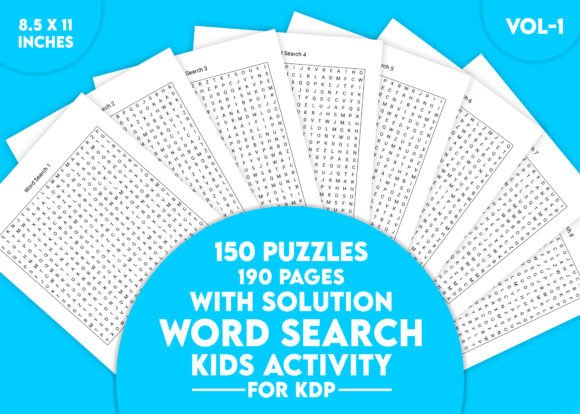
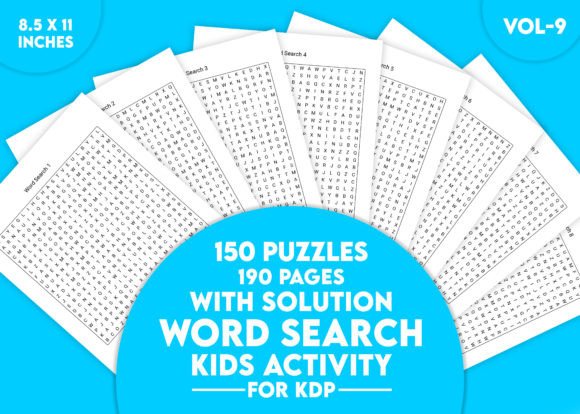
Word search puzzles have maintained a steady presence in puzzle books, activity pads, and digital printouts for decades. They seem deceptively simple, yet they hold layers of cognitive engagement and creative possibility that appeal to a strikingly wide audience. With the rise of independent publishing and print-on-demand resources, themed puzzle collections have become more accessible and more varied than ever before. A perfect example of this evolution is Word Search Puzzle for KDP Vol-9, a comprehensive set designed to deliver both entertainment and mental stimulation in a clean, reproducible format. But what exactly makes such a volume valuable for parents, educators, therapists, and even self-publishers? The answer extends far beyond a simple grid of letters.
The Architecture of a Satisfying Mental Challenge
Every word search puzzle is built on a structural tension between concealment and discovery. The solver confronts a rectangular field of apparently random letters, but hidden inside are carefully placed terms that relate to a unifying theme. The brain toggles between two scanning modes: a broad, parallel search for familiar letter groupings and a narrow, sequential hunt that follows a specific target word. This dual-mode visual processing is what makes the activity feel simultaneously relaxing and alert. It activates pattern recognition pathways without inducing the stress of time-sensitive logic problems.
When examining a well-constructed puzzle collection, like the one featured in Volume 9, several quality markers stand out. The grid density matters. Too few letters and the words pop out instantly; too many and the noise overwhelms the signal. A balanced grid—often 15x15 or 20x20—provides a comfortable scanning rhythm. More importantly, word placement must be deliberate. Top-tier puzzle designers ensure that the hidden words are woven so they intersect naturally, creating a lattice of letters that rewards the eye with occasional accidental finds. This "chain reaction" effect, where spotting one word helps uncover a crossing term, represents the craft at its best.
Directional Diversity and Its Impact on Difficulty
One of the quiet innovations in modern puzzle compilation is the strategic use of directionality. The standard eight-direction model—horizontal, vertical, and the four diagonals, each in forward and backward orientation—creates a full sensory sweep. For younger solvers or beginners, restricting words to forward horizontals and verticals reduces frustration. For advanced users, activating all directions forces the brain to rotate letter sequences mentally, a lightweight spatial reasoning exercise. Many well-designed volumes, including this 150-puzzle collection, incorporate a mix of difficulty tiers by varying directional complexity alongside grid size and word length. This architectural thoughtfulness keeps the solver engaged across multiple sessions.
Beyond Entertainment: Cognitive and Educational Dimensions
It would be a mistake to regard word searches solely as a pastime. Educators and developmental psychologists have long recognized their supporting role in literacy development. For early readers, scanning a grid for a known word reinforces orthographic mapping, the process by which the brain connects letter sequences to sounds and meanings. Each successful find solidifies the visual imprint of the word, aiding spelling accuracy and reading fluency. When themed puzzles—such as those covering animals, space, geography, or historical figures—are used, vocabulary building happens incidentally. Children absorb the spelling and shape of domain-specific terms without the resistance often encountered in direct vocabulary drills.
The cognitive benefits extend into adult life and older age. Engaging in visual search tasks that require sustained attention and pattern discrimination has been associated with maintaining processing speed and executive function. Unlike crossword puzzles that demand external knowledge retrieval, word searches rely more heavily on perceptual scanning and the ability to ignore irrelevant stimuli. This makes them a non-intimidating cognitive exercise for individuals who may feel excluded by more trivia-heavy puzzle formats. The presence of solutions at the back of the book, formatted efficiently with four per page, transforms a potentially frustrating dead end into a learning moment. Solvers can retrace their steps, understand the missed pattern, and refine their scanning techniques for the next grid.
Mindfulness and the Quiet Pleasure of Completion
A less discussed but equally significant dimension is the meditative quality of the activity. The physical act of tracing a line through a discovered word—whether with a pencil, highlighter, or fingertip—provides a tactile, repetitive reward signal. There is a gentle closure as each word is eliminated from the search list, a series of micro-completions that accumulate into a satisfying whole. In a world saturated with interruptive digital notifications, the single-page, single-focus nature of a printed puzzle creates a rare pocket of uninterrupted attention. The 8.5 by 11 inch page size further supports this. The large format provides enough white space around the grid for the eyes to rest, preventing the cramped feeling that smaller puzzle books often induce. It also makes the letters comfortably legible for young eyes and older solvers who may struggle with fine print.
Designing for Diverse Users and Settings
The structure of a puzzle collection can either limit or expand its user base. Word Search Puzzle for KDP Vol-9 employs a thoughtful layout philosophy: one puzzle per page. This single-page dedication is far from a trivial detail. When puzzles share a page back-to-back, bleed-through from markers or even heavy pencil pressure can disrupt the second puzzle. A dedicated page per grid allows for the use of colored pencils, gel pens, or even light water-based markers—tools that children often find more motivating than standard graphite. It also provides a clean surface for photocopying, a practical necessity for teachers and activity coordinators who need to distribute puzzles to a group without infringing on the master copy's usability.
Consider the variety of environments that benefit from this format:
- Classroom learning stations focused on specific thematic units.
- Homeschool morning baskets offering a gentle, screen-free warm-up activity.
- Speech and occupational therapy sessions targeting visual tracking and sustained attention.
- Senior center recreation rooms providing accessible cognitive engagement.
- Waiting room activity tables in pediatric or family practices.
- Travel kits where bulkier activity sets are impractical.
The inclusion of solutions cannot be understated in these contexts. For a classroom teacher managing twenty students, the ability to quickly verify answers from a compact answer key (four solutions per page) frees up time for individualized instruction. For a grandparent puzzling alongside a grandchild, the solution pages offer a graceful way to provide hints without outright giving away the word, perhaps by covering the list and revealing only the first letter of the elusive term. The digital delivery as a print-ready PDF also means the volume can be reprinted endlessly within a single household or classroom, a significant cost and convenience advantage over single-use consumable books.
Application Pathways for Content Creators and Self-Publishers
Beyond the direct end-user, a collection like this holds a specific appeal for individuals looking to enter the print-on-demand market, particularly through Kindle Direct Publishing. The phrase "KDP" in the volume's title signals its optimization for that ecosystem. High-quality interiors that require minimal formatting adjustment are a prized resource. The 8.5 x 11 inch trim size is both standard and popular for activity books, and a clean, vector-based PDF means sharp printing. For a creator seeking to build an activity book brand without designing 150 puzzles from scratch, a professionally crafted volume offloads the most labor-intensive portion of the project. The creator can then focus on cover design, niche marketing, and branding, knowing the interior delivers a tested user experience.
Thematic Versatility and Repeat Engagement
A single puzzle is a short-lived experience, but a collection of 150 distinct puzzles represents a long-term relationship. The thematic range becomes critical for stamina. A well-curated puzzle volume rotates through categories methodically, perhaps moving from natural world topics to everyday objects, then to more abstract concepts like emotions or occupations. This prevents the cognitive staleness that sets in when a solver realizes every puzzle is a variation on "types of fruit." The variety also broadens the age range. A six-year-old may excel at finding short, concrete animal names, while a ten-year-old sibling is drawn to puzzles featuring landforms, mythology, or scientific instruments. The same book serves multiple developmental stages, making it a cost-effective addition to a home library.
Furthermore, the leftover-letter or hidden-message feature, common in intermediate and advanced puzzles, adds a layer of meta-puzzle solving. Once all listed words are circled, the remaining letters—when read in order—spell out a joke, a fact, or a quotation. This extends the activity's life beyond the word hunt and provides a built-in accuracy check. If the leftover letters do not form a coherent message, the solver knows a word was missed or incorrectly marked. It is an elegant design element that encourages thoroughness without feeling like a punitive grading mechanism.
Integrating Digital and Physical Play in a Balanced Way
In an era where children and adults alike face constant screen exposure, paper-based puzzles offer a tangible, low-arousal alternative to digital games. There is no autoplay, no notification badge, no algorithm curating the next task. The locus of control is entirely with the individual. The permanence of paper also matters. A completed puzzle page becomes a physical token of effort that can be displayed, collected, or dated, creating a personal archive of progress over time. For children building confidence in their reading and problem-solving abilities, this visibility of accomplishment is psychologically valuable.
For families seeking to curb recreational screen time without sacrificing entertainment, a thick stack of printed puzzles positioned near the kitchen table or living area often generates spontaneous engagement. A child drifting by may pause, pick up a pencil, and complete a few words before moving on—a pattern of micro-sessions that, cumulatively, builds concentration stamina far more effectively than a mandated "thirty minutes of puzzles." The accessibility of the large-print format on standard letter-size paper ensures the invitation is always open and visually approachable.
Selecting the Right Puzzle Collection for Your Needs
Not all word search volumes are created with equal care. When evaluating a collection, whether for personal use or as a commercial interior, several quality indicators deserve attention. First, grid integrity: are the words fully contained within the grid, or do they awkwardly break at edges? Second, word list accuracy: do any of the theme words contain spelling errors that would undermine trust in an educational product? Third, solution correspondence: do the provided solutions accurately reflect the word placements in each corresponding puzzle? Fourth, typographic clarity: is the font large, sans-serif, and evenly spaced to avoid letter crowding?
Word Search Puzzle for KDP Vol-9 addresses these checkpoints through its formatted, pattern-tested design. The single puzzle per page rule directly supports typographic clarity, preventing the font-size reduction that would be necessary to squeeze multiple puzzles onto a sheet. The separation of solution pages into compact, four-per-page layouts keeps the overall page count manageable without burdening the main puzzle experience. It’s a thoughtful publishing decision that reflects an understanding of how real people—children and adults—actually use these books.
Ultimately, the enduring strength of the word search format lies in its humility. It does not demand genius; it requests patience. It offers a small, quiet victory with each circled term. In a carefully assembled volume, these small victories accumulate into a steady habit of attentive observation that crosses generational boundaries. Whether deployed in a kindergarten classroom, a memory care facility, or a self-published activity book on a global marketplace, a well-crafted word search collection serves as a dependable conduit for focused, rewarding mental engagement.