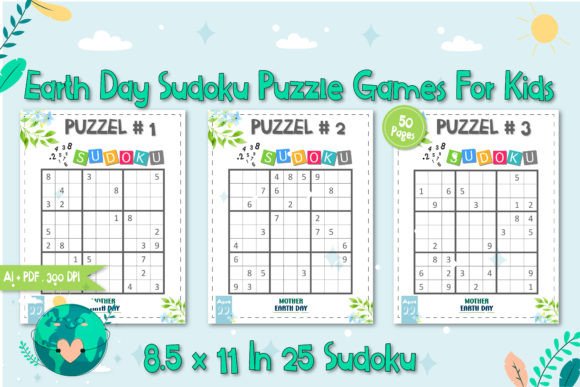
Earth Day Sudoku Puzzle Game: Eco-Friendly Fun for Kids
Every April, Earth Day reminds us to pause and appreciate the natural world, but for parents and teachers, translating that sentiment into meaningful, age-appropriate activities can be a challenge. This is where Earth Day with Sudoku Puzzle Game and the companion Earth Day with Fun and Eco-Friendly Mazes For Toddlers Vl.2 come into play—literally. These printable activity packs turn a global event into a hands-on learning experience that sticks. More than simple busywork, they weave together early logic skills, fine motor development, and environmental awareness in a format young children actually enjoy.
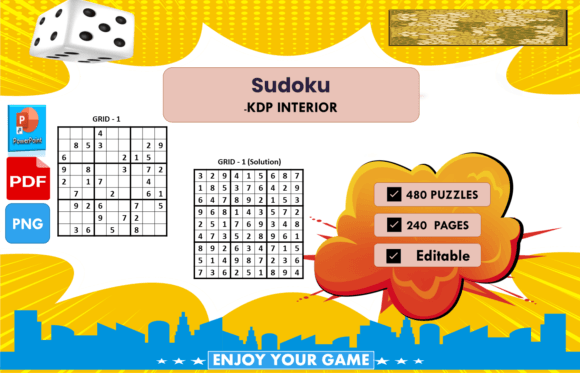
Designed for toddlers, preschoolers, and early elementary students, this downloadable bundle includes 50 pages of Earth Day-themed puzzles: picture Sudoku grids and line-tracing mazes. The package arrives as an editable PDF and an AI file, sized at a crisp 8.5 by 11 inches, ready for printing at home, in the classroom, or at a local copy shop. But what makes this resource genuinely useful isn’t just the print quality—it’s the way it reduces prep time for adults while giving children a screen-free, planet-positive activity that builds real skills.
Why Earth Day Activities Matter for Early Childhood
Children learn best when abstract ideas connect to tangible experiences. Discussing recycling or conservation with a three-year-old can feel vague, but completing an “Earth Day with Sudoku Puzzle Game” grid that features smiling recycling bins, seedlings, and water droplets suddenly anchors those concepts in a puzzle they can manipulate. The visual cues help children associate positive emotions with eco-friendly actions before they fully grasp the science.
For educators and caregivers, themed printables like these accomplish two things at once: they celebrate a calendar event and meet developmental milestones. Sorting images in a Sudoku grid encourages pattern recognition, categorization, and early problem-solving. Tracing a winding maze path from a compost pile to a garden strengthens pencil grip and hand-eye coordination. When the theme is Earth Day, kids also absorb the message that caring for the planet matters—something repeated exposure normalizes from a young age.
Inside the Earth Day Sudoku Puzzle Game
Traditional Sudoku relies on numbers, but this version swaps digits for adorable illustrations: suns, trees, globes, reusable bags, and more. Each 4x4 grid challenges children to place four unique pictures into rows, columns, and quadrants without repeating any. Because the logic is visual rather than numerical, even pre-readers can join in. That’s a crucial accessibility feature—you don’t need to wait until a child understands numerals to introduce the foundational reasoning skills Sudoku builds.
The Earth Day with Sudoku Puzzle Game file includes multiple difficulty levels. Beginners start with partially filled grids and fewer missing pieces; advanced pages leave more empty spaces, requiring deeper analysis. This gradient lets you meet a group of kids exactly where they are. A kindergarten teacher could print five different pages and quietly differentiate without fanfare, while a parent at home might save the harder puzzles for a rainy afternoon a few months later. The progression feels natural and keeps frustration low.
Another practical strength is the cut-and-paste element. Most pages include a picture bank at the bottom; children can physically cut out the tiles and glue them into place. This adds a tactile, craft-like layer that further engages fine motor muscles and extends the activity’s duration. For kids who resist pencil-and-paper tasks, the scissor-and-glue approach often flips their attitude entirely.
Eco-Friendly Mazes for Toddlers: A Closer Look
While Sudoku puzzles sharpen logical thinking, the Earth Day with Fun and Eco-Friendly Mazes For Toddlers Vl.2 targets spatial awareness, planning, and sustained focus. Each page presents a simple maze: an electric car navigating toward a charging station, a bee buzzing through a flower garden, a water drop traveling to a thirsty plant. The paths are wide and forgiving, designed for chunky crayons or the unsteady pencil strokes of three- and four-year-olds.
These mazes also serve as conversation starters. A maze showing a plastic bottle heading to a recycling bin can spark a chat about why we sort waste. An image of a child planting a tree might lead to a weekend project outdoors. The artwork doesn’t lecture—it invites curiosity. That’s a hallmark of well-designed early childhood materials: they ignite questions rather than deliver a sermon.
Because the maze pages are part of the same 50-page editable bundle, everything matches visually. Consistent colors, friendly characters, and unified Earth Day branding create a polished look whether you’re assembling individual worksheets or binding them into a complete activity booklet.
Practical Ways to Use These Printables
Versatility is one of the strongest selling points here. The pages aren’t locked to a single setting; they work across a range of environments and purposes.
- Classroom centers. Place the Sudoku pages in a math or logic center, and let small groups work together. The mazes fit perfectly into a morning work tub or an early-finisher bin.
- Homeschool units. Pair the activities with a short nature walk or a read-aloud about planet Earth. The puzzles reinforce the day’s theme without requiring extra planning.
- Daycare and after-school programs. Because the print files are editable, you can customize them with each child’s name or insert a program logo before printing—a simple touch that boosts a sense of ownership.
- Party favors and event giveaways. For an Earth Day celebration at a library, community center, or birthday party, print a selection of mazes and Sudoku grids, staple them into mini booklets, and pair them with a box of crayons. Parents appreciate a gift that isn’t plastic waste.
- Digital classrooms. Even in a remote learning setting, the PDF lends itself well to annotation apps like Seesaw or Kami. Kids can complete the mazes and Sudoku grids on a tablet, maintaining the skills practice without paper if needed.
Benefits Beyond the Celebration
While Earth Day provides a timely hook, the cognitive and behavioral benefits of these puzzles extend far beyond April 22nd. Regularly solving picture Sudoku has been linked to improved working memory, attention to detail, and logical reasoning in young children. Mazes encourage patience and persistence—qualities that pay off in every academic subject. Because the content is reusable, you can reintroduce it later in the year when reviewing environmental topics or simply when a child requests “the tree puzzles again.”
There’s also a subtle communication advantage. When a school or therapy office uses themed materials like Earth Day with Sudoku Puzzle Game, it signals to families that the organization values both education and environmental stewardship. It’s a small branding touch, but consistency across materials—downloads, newsletters, social media posts featuring kids with the worksheets—can strengthen a reputation as a thoughtful, eco-conscious provider.
For entrepreneurs, bloggers, and publishers, the included AI file is a standout asset. Having an editable vector format means you can adapt the artwork for your own product bundles, blog freebies, or lead magnets. You might extract an illustration to create custom Earth Day flashcards, a matching game, or a coloring page. Because the license allows editing and commercial use (check the specific terms for your purchase), the resource can evolve with your brand’s needs rather than sitting idle after one season.
Considerations When Selecting Earth Day Resources
Not all printable activity packs are created equal. Before hitting download on any educational material, especially one you plan to use repeatedly or share, ask a few targeted questions to ensure it’s worth your time—and your learners’ attention.
1. Is the artwork age-appropriate and culturally inclusive? The Earth Day Sudoku and maze pack uses clean, friendly illustrations that avoid stereotyping. Check for images that depict diverse children caring for the environment; representation matters even in a puzzle page.
2. Does the difficulty scale? A pack with only one challenge level may bore some kids and overwhelm others. The tiered Sudoku grids and maze paths in this bundle offer that built-in scalability.
3. Are the files truly editable? A PDF labeled “editable” might only allow you to add text in limited fields. This pack comes with a fully editable AI file (Adobe Illustrator), giving you layer-level control for repositioning, recoloring, or deleting elements if you want to brand the pages for your business or adapt them for a special-needs audience.
4. How many pages? What size? Fifty pages of puzzles on standard 8.5 by 11-inch sheets mean you can print at home with zero fuss. The quantity is generous enough to cover several Earth Day sessions or provide multiple weeks of early-finisher material.
5. Will it engage the child long enough? Test one page first. Watch how a child interacts with the picture Sudoku—do they persist? Do they ask what the images represent? Engagement is the real acid test, and these activities tend to hold attention because they offer a gentle challenge wrapped in colorful, relatable visuals.
A practical move: laminate a few Sudoku pages and maze paths, add hook-and-loop dots or dry-erase markers, and you’ve turned a consumable worksheet into an eco-friendly reusable center. It’s a small upgrade that aligns perfectly with the Earth Day message of reducing waste.
Real-World Observations and Recommendations
Teachers who’ve used picture Sudoku in pre-K and kindergarten rooms often report that children who typically shy away from math tasks eagerly grab the cut-and-paste puzzles. Theming the grids around Earth Day amplifies that effect—kids feel part of something bigger. One educator mentioned hanging completed Sudoku pages on a “We Love Our Planet” bulletin board, which sparked hallway conversations among other classes.
Parents using the maze book for toddlers notice that the eco-friendly imagery sticks. After completing a maze that traces a path to a recycling truck, kids start asking at home, “Does this go in the blue bin?” The activity becomes a catalyst for real-world eco-behavior, not just a seatwork exercise.
For a blogger or content creator, the editable AI file is a goldmine. You could design a series of Instagram story tiles featuring a maze-of-the-day, leading followers to a free download. Or a tutoring service might rebrand the Sudoku grids with their logo and offer them as a free resource to local families—building goodwill while showcasing expertise in early childhood education.
When implementing these resources, avoid over-reliance on the worksheets alone. Pair them with tangible actions: after solving a Sudoku grid with a sapling picture, plant a seed in a cup. After a maze that ends with a reusable water bottle, let your child decorate their own bottle. The tangibility cements the connection between the puzzle and the planet, transforming a simple PDF into a memory.
There’s a quiet benefit to using Earth Day-themed printables that often goes unnoticed: they help normalize eco-conscious thinking. Repetition builds habits, and when a child associates a fun, low-pressure activity with caring for nature, that mindset starts to stick. Over time, the Earth Day Sudoku Puzzle Game isn’t just a seasonal download—it’s one small part of shaping a generation that instinctively values the world around them.