Connect Four Interior for KDP Vol-5
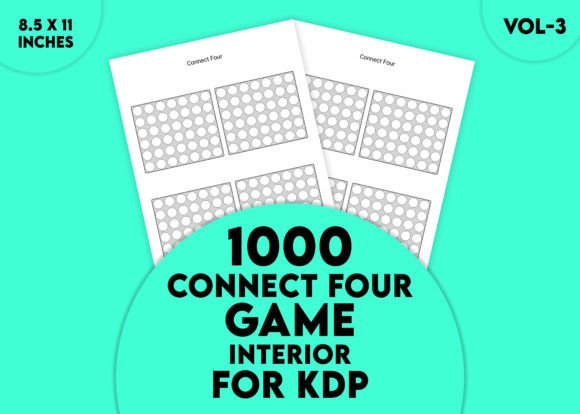
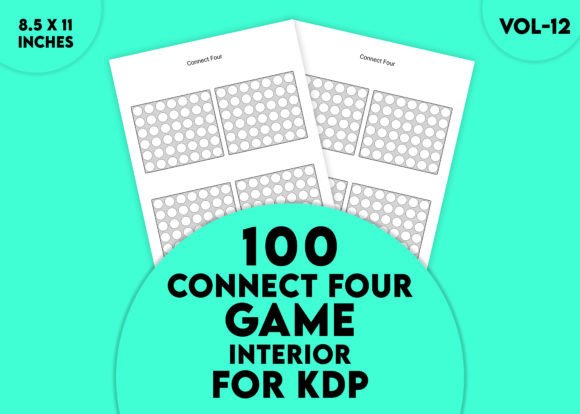
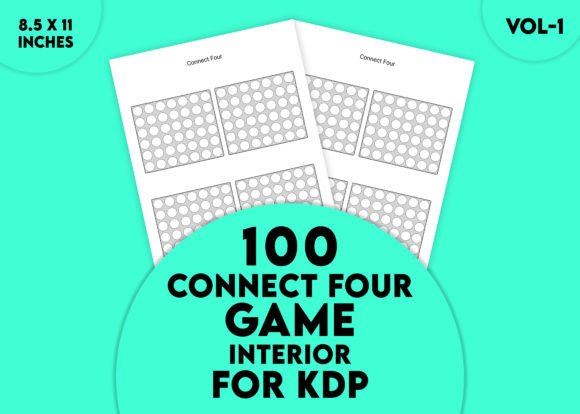
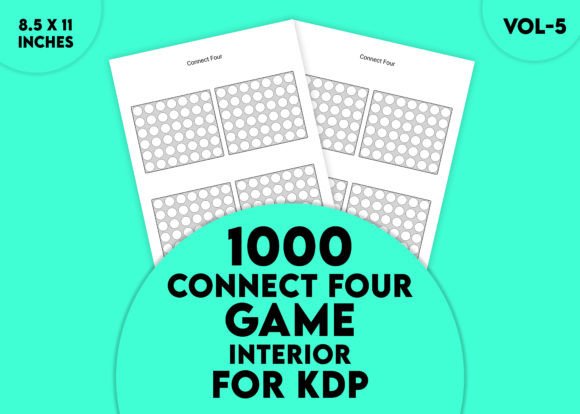
Imagine holding a ready-made digital product that skips the blank page struggle. Connect Four Interior for KDP Vol-5 is a curated 1,000-page PDF purpose-built for creators who want to publish clean, functional, and visually consistent puzzle books without designing a single grid. Whether you sell on Amazon KDP, teach design workshops, or build a portfolio of activity resources, this interior file transforms how you approach game-based printed content.
The file arrives as an editable PDF sized at a generous 8.5 by 11 inches. That letter-sized format feels familiar and professional, and it prints beautifully through any print-on-demand service. Inside those 1,000 pages, you get four distinct Connect Four games per page. This layout isn’t just space-efficient; it gives your final book a rhythm that readers appreciate — quick to flip through, easy to photocopy, and visually balanced enough for all age groups.
Why a Pre-Designed Interior Changes Your Creative Workflow
Most low-content publishers spend hours structuring grids, aligning columns, and second-guessing margins. With this volume, that friction disappears. The grids are crisp, evenly spaced, and ready to accept player marks. You direct your energy toward cover design, niche selection, or theme enhancements — the parts of publishing that actually move the needle. It’s a pragmatic shift from builder to brand strategist.
For entrepreneurs, that means shorter time-to-market. A fitness coach can bundle a Connect Four challenge book with wellness journals. A parenting blogger can launch a screen-free activity collection under her own imprint. Because the interior is editable, you can subtly tweak line weights or add section dividers while preserving the core structure. The heavy lifting is already done.
Practical Applications Beyond the Expected Puzzle Book
Most people see a game grid and think “puzzle book.” But the real value lies in cross-contextual repurposing. Here are a few ways creative professionals are already using similar interiors:
- Classroom engagement kits: Teachers print individual pages as warm-up logic exercises. Two students mark their moves with dry-erase sleeves, practicing strategic thinking without screens.
- Senior brain-training bundles: Therapists and caregivers integrate large-print Connect Four sheets into cognitive stimulation programs. The 8.5 x 11 size respects declining vision while keeping sessions dignified.
- Event activity packs: Wedding planners or corporate retreat organizers include folded game sheets inside welcome folders, branded with a simple logo in the corner of the editable PDF.
- Magnetic road trip books: Parents laminate pages and adhere magnetic backing. Kids play on the go without loose pieces. The four-per-page layout means fewer total sheets to pack.
Each adaptation stems from the same core file — clear proof that a versatile interior is an asset, not just a product.
Making the Most of 1,000 Pages Without Overwhelm
A thousand pages sounds massive, and it is. But the four-game-per-page structure actually keeps the page count manageable for users. It also allows you to create a book that feels abundant, not bloated. If you’re publishing directly on KDP, that page volume positions your title as a premium workbook rather than a thin booklet. Customers associate higher page counts with value, especially in the activity book category.
To stay organized, treat the PDF like a master template. You don’t have to use all 1,000 pages in a single project. Slice it into themed quarterly journals, seasonal minibooks, or even a progressive “52-week challenge” where each week offers a handful of games. Because the file is editable, you can insert divider pages, inspirational quotes, or scoring trackers without breaking the visual continuity.
Design Consistency That Builds Your Brand Identity
Readers notice when a book feels cohesive. The Connect Four Interior for KDP Vol-5 uses a uniform grid style throughout, so even if you add your own introductions or instructional pages, the core game zones remain identical. This consistency signals professionalism — a subtle trust builder that makes your book look intentionally crafted, not auto-generated.
If you’re a designer or brand strategist, lean into that uniformity. Add a subtle header with your brand name, a website URL, or a short hashtag. The editable nature of the PDF means those branding elements can be batch-applied without touching each page individually. Suddenly, you’re not just selling a puzzle book; you’re distributing a branded piece of intellectual property that points back to your larger ecosystem.
Customization for Niche Audiences: Seasonal, Themed, and Targeted
The broad appeal of Connect Four hides an opportunity: hyper-specific targeting. Imagine taking this interior and wrapping it in a theme that speaks directly to a passionate group.
- Gardening enthusiasts: Replace standard circle markers with tiny flower shapes. Add botanical facts between game sets. Your book becomes a garden club gift.
- Pet lovers: Use paw print graphics and name each game after a dog breed. Suddenly, it’s a novelty item on Etsy or a fundraiser for animal shelters.
- Math coaches: Integrate number-based scoring where winning lines add up to a sum. The game becomes a stealth arithmetic lesson.
- Summer camp directors: Create a camp-exclusive version with a camp map, core value reminders, and a spot for cabin names. The interior holds the game; your edits tell the story.
These aren’t hypotheticals. They’re proven ways to take a standard layout and add emotional or functional value that generic puzzle books lack. The editable PDF format is the quiet enabler of that creativity.
How Educators and Facilitators Use the Four-Per-Page Layout
Space matters in educational settings. A single sheet with four games gives instructors flexibility. They can cut the page into quarters for station rotations, hand out one game at a time to manage pacing, or leave the sheet intact for pairs to work through multiple rounds. The 8.5 x 11 inch size fits standard trays and binders, so organization stays tidy.
For special education professionals, the clean, uncluttered grid reduces visual overwhelm. Learners who struggle with busy worksheets can focus strictly on placing an “X” or an “O” — or even a colored dot sticker for fine motor practice. The game’s simple objective masks layers of strategic thinking, impulse control, and turn-taking practice. Documenting those sessions becomes easier when the interior is consistent and reproducible.
Monetization Ideas That Go Beyond a Standalone Book
Publishing on KDP is the obvious first step, but smart creators think in terms of product ecosystems. That 1,000-page interior can fuel a whole line:
- Printable Etsy packs: Extract 20 or 50 pages as a digital download for teachers or parents. Sell the convenience of instant access without the shipping costs.
- Co-branded collaborations: Pair with a graphic designer who creates a unique cover and sells her edition using your authorized interior license. Both parties win.
- Membership exclusive content: Patreon supporters or newsletter subscribers get a themed Connect Four mini-book each month, built from the same core file with rotating color schemes.
- Fundraising products: Schools, churches, or clubs customize with their logo and sell the activity books at events. The high page count commands a higher donation price point.
Each derivative product leans on the interior’s reliability while you experiment with packaging, audience, and messaging. The game itself doesn’t change; the context around it transforms completely.
Keeping the User Experience Clear and Intuitive
With any game-based product, usability is king. The Connect Four Interior for KDP Vol-5 respects this by keeping the grids free of unnecessary decoration. Each game sits in its own clearly defined space. No confusing overlapping lines or ambiguous boundaries. That clarity matters when the end user is a child learning the rules for the first time, or an older adult who appreciates straightforward design.
As you prepare the interior for publication, consider adding a single instruction page that explains the objective — four in a row vertically, horizontally, or diagonally — with a small diagram. Many puzzle book creators skip this step, assuming universal familiarity. But explicit instructions reduce return rates and negative reviews. The editable format lets you insert that page near the front without disturbing the grid pages that follow.
Balancing Inspiration and Practicality for Long-Term Results
It’s easy to get excited about launching ten variations at once. A more sustainable approach starts with one tightly focused book, then iterates based on real feedback. Use the Connect Four Interior for KDP Vol-5 as your foundation, but wait to see how customers actually respond before investing in elaborate themes. Early adopters will tell you whether they prefer tear-out pages, spiral-bound flexibility, or black-backed sheets that prevent see-through marking.
That feedback loop is pure gold. A father might mention that his twins love coloring the circles after each game. That small comment can spark a “Color & Play” edition where every fourth page includes a simple coloring element. None of these evolutions require rebuilding the interior from scratch. Because the PDF is editable, you adapt quickly and publish the next iteration while interest is still fresh.
Transforming a Simple Grid into a Creative Asset
At first glance, a Connect Four grid is unassuming. Six rows, seven columns. But multiplied across 1,000 pages, it becomes a vessel for community, cognition, and commerce. Connect Four Interior for KDP Vol-5 gives you that scale in a single purchase, while leaving room for your instincts as a creator to shape the final experience.
Whether you’re a blogger seeking a lead magnet, a marketer building a branded product suite, or an educator crafting accessible learning tools, this interior removes the technical barrier so you can focus on connection and meaning. The game brings people together; your vision makes it worth holding onto.