Soap Cost Calculator: Accurately Price Every Bar
Making cold process or melt-and-pour soap at home starts as a creative passion. The moment you decide to sell, however, every ounce of oil, every gram of fragrance, and every minute of labor needs to earn its place. A Soap Cost Calculator turns that scattered collection of receipts and mental math into a clear, reliable picture of what each bar truly costs to produce. Instead of guessing a price based on what competitors charge, you build your retail price from real data. This shift protects your profit margin and helps you spot where small recipe tweaks can save meaningful money over dozens of batches.
What a Soap Cost Calculator Actually Does
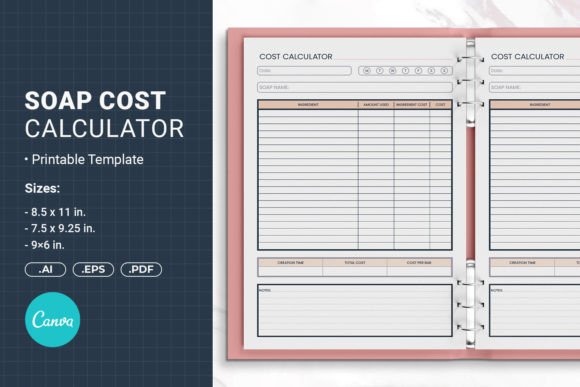
At its core, this tool is a digital or spreadsheet-based system that lets you list every ingredient in a recipe, the amount used per batch, the price you paid for the full container, and any packaging or labeling costs. It then calculates the exact cost per batch and often breaks that down into cost per bar. Many versions also account for overhead like electricity, water, and even a portion of your market stall fees. Some calculators go further, letting you input labor time and an hourly rate to see the real value of your work reflected in the final number.
You do not need to be an accountant to use one. In most cases, you plug in the numbers once—updating only when a supplier price changes—and the calculator does the rest. This simplicity makes it accessible for hobbyists who want to understand their material costs, as well as for full-time soap businesses that need to track margins across multiple product lines.
Why Guessing Prices Can Undermine Your Work
Handmade soap competes in a market that includes mass-produced commercial bars, artisanal local creators, and established online brands. Relying on a gut feeling or matching a competitor’s price without knowing your own cost structure leads to one of two painful outcomes. Either you price too low and slowly lose money on every sale, or you price too high without being able to explain the value, and customers look elsewhere. A Soap Cost Calculator removes that uncertainty. You see, down to the penny, what a bar needs to sell for just to break even. From there, you can mindfully add a profit margin that funds growth, covers seasonal slow periods, and rewards your time.
Building a Real Cost Profile: Ingredients, Packaging, and Hidden Expenses
Many first-time sellers focus heavily on the obvious expenses like olive oil, coconut oil, shea butter, and sodium hydroxide. However, small consumables have a quiet but cumulative impact. Consider these often-overlooked costs:
- Fragrance and essential oils, which can swing dramatically in price per bottle
- Colorants, micas, clays, and natural additives like oatmeal or coffee grounds
- Molds, spoons, spatulas, and mixing bowls that wear out and must be replaced
- Labels, shrink wrap bands, tissue paper, boxes, and safety seals
- Testing materials: pH strips, sample batches, and even a dedicated freezer for milk soaps
- Business insurance, Etsy listing fees, transaction processing charges, and shipping supplies
A robust Soap Cost Calculator prompts you to include these as line items. You might discover that a beautiful botanical label adds more per bar than you realized, or that a premium fragrance triples the ingredient cost compared to a simpler essential oil blend. Without this visibility, you cannot make informed choices about recipe design or product line direction.
Time as a Real Cost Factor
One of the most debated elements in artisanal pricing is labor. Some makers feel uncomfortable paying themselves, especially when they still view their work as a hobby. But ignoring time distorts the true cost. If a batch of 24 bars takes two hours to make, cut, bevel, cure, and package—plus cleaning and labeling—that commitment has concrete value. A Soap Cost Calculator that includes a labor field lets you assign a realistic hourly wage. Even a modest rate can shift the final price significantly and make clear whether a particular recipe is viable as a product. For those who eventually want to hire help or scale, this data becomes essential for forecasting and setting service pricing.
Adapting Recipes Without Losing Profitability
Recipe experimentation is part of the soap maker’s journey. You might want to swap apricot kernel oil for sweet almond oil, add silk fibers, or introduce a premium ingredient like manuka honey. With a calculator, you can model the impact before purchasing materials. If the new variation pushes the bar cost too high for your target market, you can test combinations—reducing the honey slightly, or blending the expensive oil with a more economical carrier—until you find a balance that delights customers without shrinking your margin. This capability turns creative freedom into a strategic advantage rather than a financial risk.
Who Gains the Most from Using This Tool
Small-scale hobbyists often assume cost tracking is only for businesses, yet they benefit immediately by understanding whether gift batches or charity donations are sustainable. Knowing the real price of materials may also encourage more efficient bulk purchasing. Part-time sellers at farmers markets and craft fairs operate on thin schedules; a quick cost check prevents undercharging when someone asks for a custom order or a larger bar size. Full-time online soap retailers managing dozens of listings on platforms like Shopify or Amazon Handmade need precise numbers to calculate profit per SKU, run discounts during sales, and plan inventory budgets.
Co-ops and small batch manufacturers who share costs across members or produce private-label soap for boutiques must present transparent pricing breakdowns to partners. A Soap Cost Calculator creates a document that can be shared, reviewed, and adjusted as supplier contracts change. Even soap-making instructors find value in showing students how to think about the business side early—before the first wholesale inquiry arrives.
Connecting Cost Clarity to Better Business Decisions
Price is not just a number on a tag; it is a message. When you know your costs precisely, you can confidently explain your pricing to customers without feeling defensive. You can also identify which products contribute most to your overall profit. Perhaps a simple oatmeal soap, while less glamorous, has a much healthier margin than a luxurious scrub bar laden with expensive additives. These insights guide not just pricing but also marketing efforts. You might promote the higher-margin bar more prominently or bundle it with complementary products to increase average order value.
Additionally, clear cost data helps when approaching wholesale accounts. Many store owners expect a 50% discount to stock your products. If your production cost already accounts for labor, overhead, and a reasonable profit, you can quickly see whether wholesale pricing works for a particular bar or whether you need to negotiate minimum order quantities or adjust the recipe for a separate wholesale line. Without a calculator, those conversations often end with the maker absorbing an unsustainable loss because “it’s a big order.”
Practical Example: Calculating a Lavender Oatmeal Soap Batch
Imagine a 5-pound batch yielding 10 bars. You used 16 ounces of olive oil at $0.55 per ounce, 8 ounces of coconut oil at $0.30 per ounce, 8 ounces of shea butter at $0.75 per ounce, a sodium hydroxide and distilled water combination costing $1.50, and lavender essential oil at $8.00 for the amount used. Basic ingredient cost: $8.80 (olive) + $2.40 (coconut) + $6.00 (shea) + $1.50 (lye water) + $8.00 (fragrance) = $26.70 for the batch. That is $2.67 per bar in raw materials. Now add a kraft box and label at $0.60 per bar, pushing it to $3.27. If you pay yourself $15 per hour and spent 90 minutes on this batch from melt to packaged, that is another $22.50 total, or $2.25 per bar. True cost per bar: $5.52 before any overhead. Selling at $8.00 leaves a reasonable profit. Selling at $5.00 means you are paying to work.
Percentages and numbers become intuitive when you see them laid out this way. A Soap Cost Calculator automates exactly this sequence and saves you from repeating manual math for every new fragrance or size variation.
Where These Tools Fall Short (and How to Adjust)
No calculator is perfect out of the box. Many assume you buy ingredients in identical quantities each time, but bulk purchasing changes per-ounce pricing. Others may not easily handle cost splits for materials shared across multiple batches, like a masterbatch of lye solution or a pre-blended oil mix. Some are built for solid bars only and struggle with liquid soap cost structures or specialty items like shampoo bars where additives represent a larger portion of cost. A calculator also cannot assign emotional value to an ingredient story—for instance, locally sourced lavender may carry a premium in marketing that raw cost alone does not reflect.
The solution is to treat the calculator as a starting framework rather than an unchangeable authority. You can manually add overhead percentages, create separate sheets for wholesale vs. retail pricing, and note supplier bulk discounts as they occur. The key is developing a habit of updating figures regularly. Even a simple spreadsheet version, maintained with discipline, outperforms the mental arithmetic most makers rely on.
Choosing a Method That Matches Your Workflow
Some soap makers prefer a downloadable spreadsheet with pre-built formulas they can tweak. Others lean toward an online calculator accessible from phone or tablet during market prep. A few still use pen and paper ledgers with a consistent calculation pattern. The format matters less than consistency and completeness. Look for a tool that allows you to save recipe templates, easily duplicate them for variations, and see both per-batch and per-bar costs clearly. If you work in multiple currencies or need to track price changes over time for tax reporting, those features also add practical value.
Regardless of the tool, the practice of entering data before making a recipe becomes a quiet discipline that strengthens your business. Much like checking soap temperatures before mixing, checking the cost forecast becomes second nature.
Strengthening Communication with Retailers and Customers
Direct-to-consumer selling often involves questions about why a handmade bar costs more than a drugstore option. When you understand your own cost breakdown, you can speak authentically about ingredient sourcing, small-batch attention, and the real labor involved. This transparency often increases perceived value and builds trust. For wholesale partners, providing a clear cost structure—without revealing your exact margins—demonstrates professionalism and can justify price points that support both your studio and the retailer’s shelf.
Using Cost Insight to Drive Creative Growth
Creative energy sometimes gets bogged down by financial anxiety. When you know your numbers are solid, you free mental space to develop new designs, experiment with sustainable packaging, or invest in a better booth display. A Soap Cost Calculator does not stifle artistry; it protects it by ensuring the business side remains viable. Makers who track costs over time often notice seasonal patterns: certain oils are cheaper in the fall, packaging supplies spike during the holidays. They can plan their production calendar to take advantage of these cycles, lowering overall costs while maintaining quality.
Final Thoughts on Incorporating Cost Awareness into Your Routine
Using a Soap Cost Calculator is less about spreadsheets and more about establishing a sustainable creative practice. The numbers do not dampen your love for designing a beautiful swirl or a new scent blend; they simply make sure that effort can continue to happen without draining your bank account. As your product line grows, recipes change, and selling channels multiply, this habit of tracking costs evolves into a strategic compass. It informs bulk buying decisions, helps you gracefully decline unprofitable custom orders, and ensures that the joy of soap making stays firmly connected to a healthy, growing enterprise. Start with a single recipe today, enter the full costs honestly, and watch how that bar of soap becomes a reliable partner in building the small business or meaningful side project you truly want.